Blog - The latest articles and news
Stay up-to-date with the latest industry news as our marketing teams finds new ways to re-purpose old CSS tricks articles.
Stay up-to-date with the latest industry news as our marketing teams finds new ways to re-purpose old CSS tricks articles.
by Kingdom Kode Team, Digital Innovation

You wrote the title tags. You filled in the meta descriptions. Your headings are clean. And you're still asking the same question every SMB owner asks at 11pm: why is my website not showing up on Google?
Here's the uncomfortable answer. On-page SEO is the paint. It's not the plumbing. You can paint a house beautifully and still have no water running through it. Most "decent-looking" sites that don't rank are missing three technical pieces underneath the paint: a sitemap, canonical tags, and schema.
None of these show up when you look at your site. That's exactly why they get skipped. And that's exactly why you're invisible.
Let me show you what each one does — and what it's costing you.
Google doesn't visit your site the way a customer does. It sends a crawler. That crawler has a limited budget of pages it'll look at, needs a map to find your pages, and needs labels to understand what it found.

Miss any of those three and the best-written page on earth might as well not exist. Let's go one at a time.
A sitemap is a file that lists every page you want Google to index. It's the difference between handing a delivery driver a full address list versus telling them to "just drive around and find the houses."
Without one, Google discovers pages by following links. If your booking page is three clicks deep, or your service pages aren't linked cleanly from the homepage, they can sit undiscovered for weeks or never get crawled at all.
Worse: crawl budget. Google won't crawl every page every day. If it wastes its visits on junk URLs, filter parameters, and duplicate pages, your money pages — the ones that book appointments — get crawled last or not at all.
Symptom: You search site:yourdomain.com in Google and half your pages are missing. That's a sitemap problem.
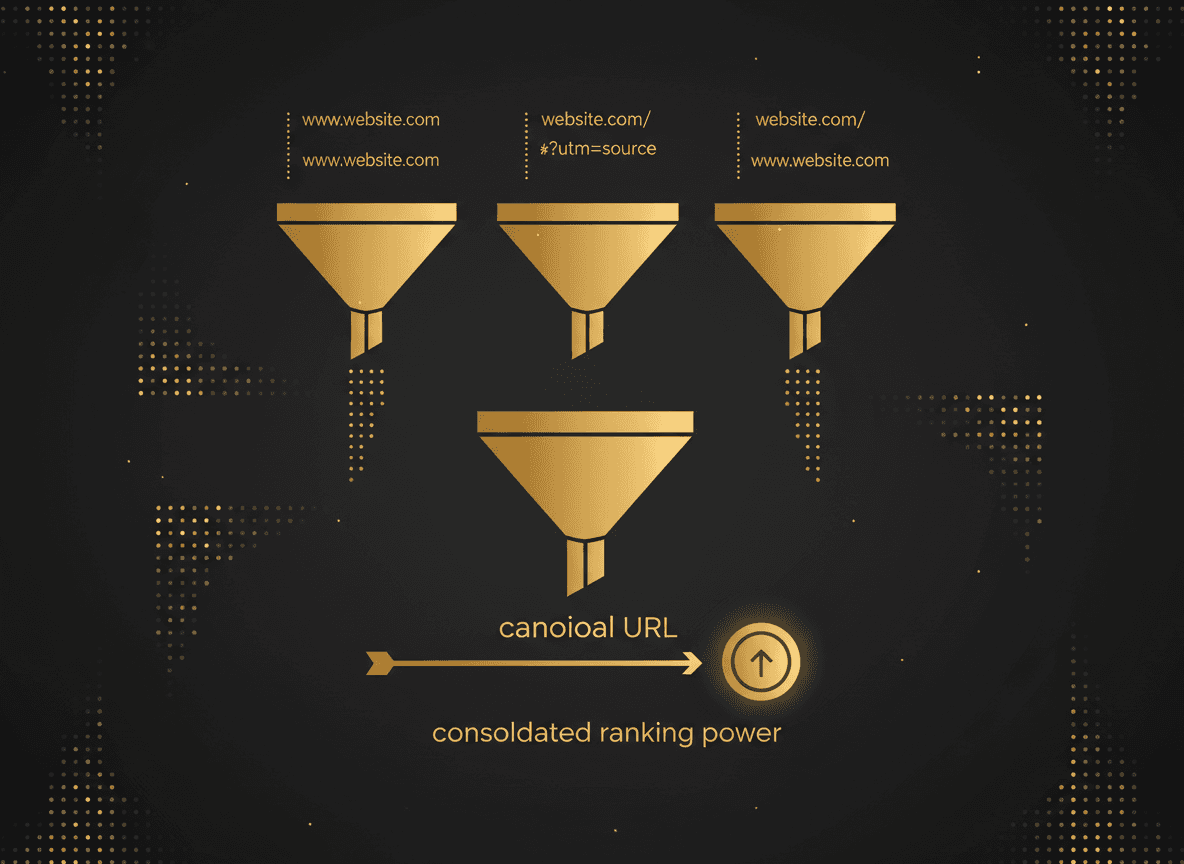
Here's a trap that catches almost everyone. Your homepage can be reached at:
To you, that's one page. To Google, that can look like four separate pages with identical content. So it splits your ranking strength across all of them and trusts none of them. You've diluted your own authority without touching a single word of your content.
A canonical tag is one line of code that says: "This is the real version. Ignore the copies." It consolidates all that scattered strength into one URL.
Symptom: You rank on page 3 for a term you should own, and a competitor with worse content beats you. Often it's because your ranking power is fractured across duplicate URLs.
Schema is structured data. It's a hidden layer of code that tells Google exactly what your page is: a local business, a service, your hours, your reviews, your prices, your FAQs.
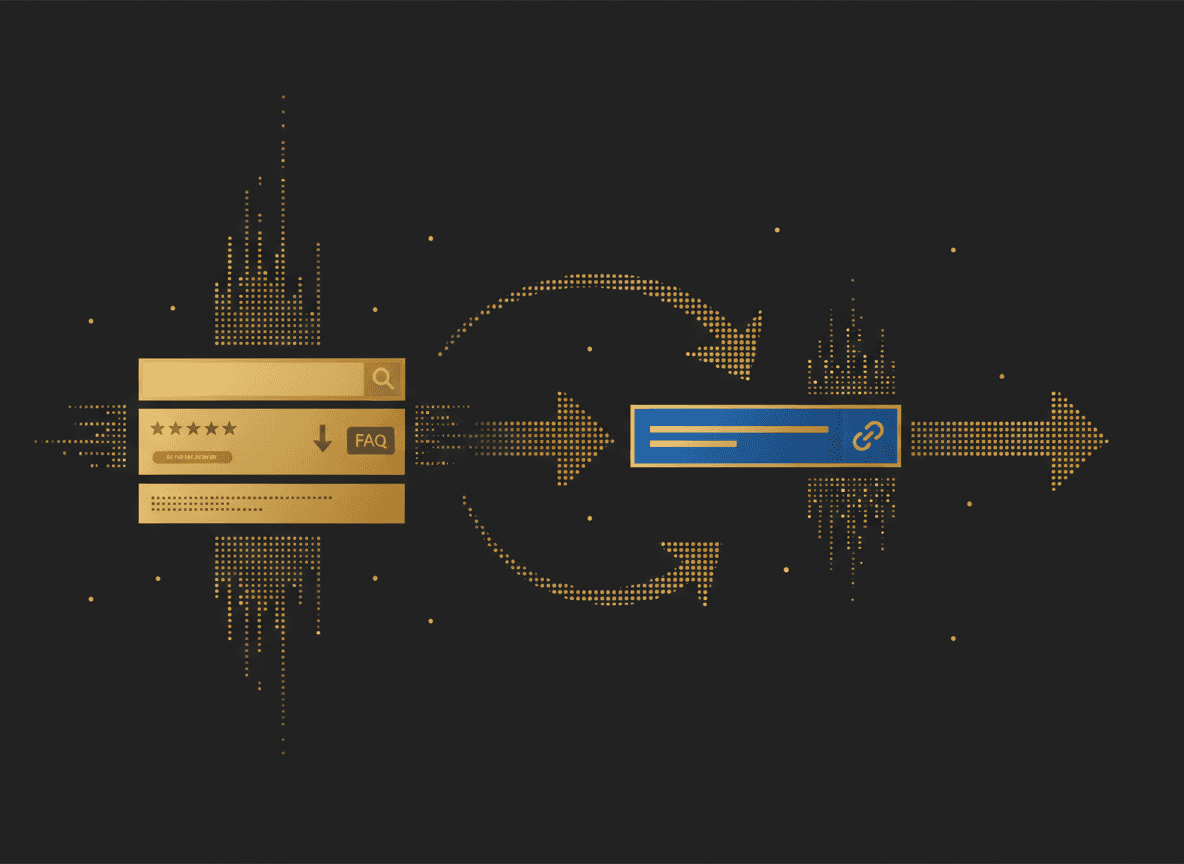
Without it, Google guesses. With it, you become eligible for the things people actually click:
And here's the part most people are late on: AI search. ChatGPT, Google's AI overviews, Perplexity — they lean heavily on structured data to understand and recommend businesses. No schema means you're not just losing blue links. You're getting left out of the answers people trust most now.
Symptom: Competitors show gold stars and FAQ dropdowns in the results. You show a plain blue link. That gap alone can cut your click-through rate in half.
Let's make it concrete. Say you're a med spa doing $40k/mo, and roughly a third of your booked clients find you through search when everything works.
Now picture the leak. Missing schema drops your click-through rate. Missing canonicals bury you a page lower. A missing sitemap means half your service pages never got indexed. You're not down 5%. You're capturing a fraction of the search traffic your content already earned.
That's the cruel part. You already did the hard, creative work — the copy, the design, the service pages. The plumbing failure means it never gets seen. You paid for a storefront on a street with no signs pointing to it.
Here's the good news. Every one of these is diagnosable in an afternoon:
site:yourdomain.com return every page you expect?If you can't answer all six with a confident yes, you found your leak. The problem isn't your content. It's the foundation under it.
The reason we don't tell people to DIY this: one wrong canonical tag can deindex your best page. Sloppy schema can trigger manual penalties. This is precise plumbing work — done right once, it runs for years. Done wrong, it makes the invisibility worse.
Stop running ads and posting content into a site Google can't fully read. Fix the plumbing first, and the content you already have starts working.
Run your free Revenue Code Diagnostic at /diagnostic. We'll show you exactly which of these technical gaps are hiding your business — sitemap, canonical, schema, and the rest — and what it's costing you in bookings. No guessing. Just the diagnosis.
Want more breakdowns like this? Read the rest of the blog, or book a pricing call if you already know you want it fixed right.
Most SaaS founders treat the free trial as a waiting room. The ones converting at 25% or higher treat it as a structured sales system. Here is how to build that system.
Read moreA product roadmap tells you what you are building. A revenue engine tells you whether it is making money. Most SaaS founders only have one of these, and it is the wrong one.
Read more