Blog - The latest articles and news
Stay up-to-date with the latest industry news as our marketing teams finds new ways to re-purpose old CSS tricks articles.
Stay up-to-date with the latest industry news as our marketing teams finds new ways to re-purpose old CSS tricks articles.
by Kingdom Kode Team, Digital Innovation
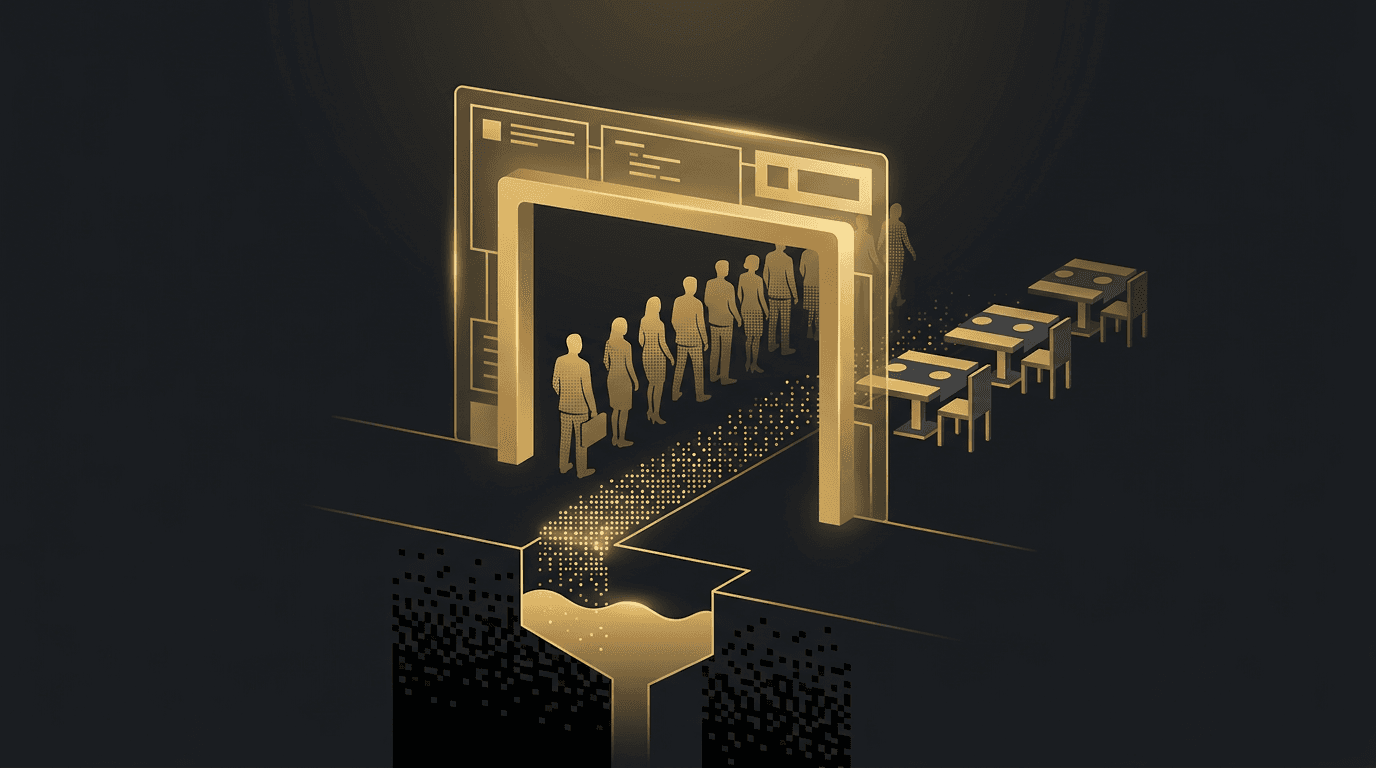
You fixed the delivery fees. You pushed customers to order direct. Good. Now look at the leak you're stepping over every weekend: the dine-in floor. A modern restaurant reservation and waitlist system is the difference between a full Friday and a room with three empty four-tops that were "booked" by people who never showed.
This isn't a nice-to-have. Those tables don't come back. That margin is gone by 9pm.
Most independent owners are running dine-in on tools from 1995: a phone, a paper book, and hope.
Three quiet killers, and none of them show up on your P&L with a label:

1. Phone-only reservations. Every booking requires a staff member to stop, pick up, and write it down. Miss the call during a rush? That party books somewhere else. Your reservations are capped by how many calls a busy host can catch.
2. No deposit or card-hold on large parties. A party of 10 books your prime 7:30 slot. They don't show. You just held your best table for 90 minutes and turned away walk-ins to protect it. That's not one lost cover — it's ten, plus the walk-ins you refused.
3. No waitlist automation. Someone cancels at 6:45. That table sits empty because nobody's working a live list to fill it in real time. Meanwhile there's a couple who left 20 minutes ago because "the wait was too long" — with no way for you to text them back.
Each leak feels small in the moment. Stack them across 52 Friday and Saturday nights and it's the biggest line item you're not tracking.
Four parts. Each one closes a specific hole.
Online reservations, 24/7. Guests book from your site, Google, or a link — no host required. You capture bookings at 11pm when the phone would've gone unanswered. Every table maps to real availability, so you stop double-seating and stop leaving gaps.
Deposit or card-hold on large parties. Set a rule: parties of 6+ leave a card or a small per-head deposit. No-shows now cost the guest, not you. Watch how fast "we'll definitely be there" turns into people who actually show up when there's $20 a head on the line.
Automated confirmations and reminders. A text 24 hours out and again 2 hours out. One tap to confirm or cancel. The party that would've silently ghosted now cancels at 4pm — giving you six hours to resell that table instead of finding out at 7:30.
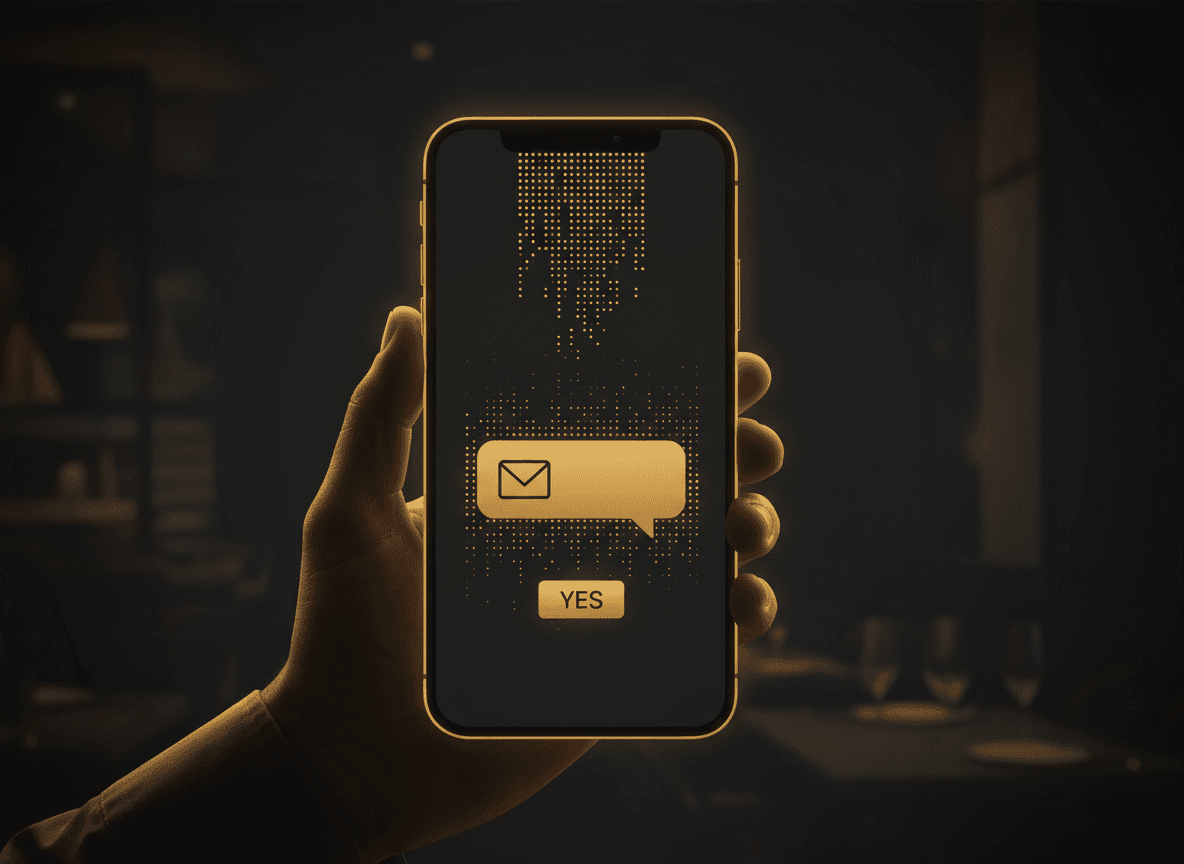
A smart waitlist that fills no-shows in real time. Walk-ins and cancellations flow into one live list. Table opens up, the system texts the next guest "your table's ready, reply YES." The couple who wandered off gets pulled back. That empty four-top gets a butt in the seat in eight minutes, not zero.
This is illustrative — plug in your own numbers. Take a hypothetical bistro doing $45 average per head, seating 80 covers on a Friday.
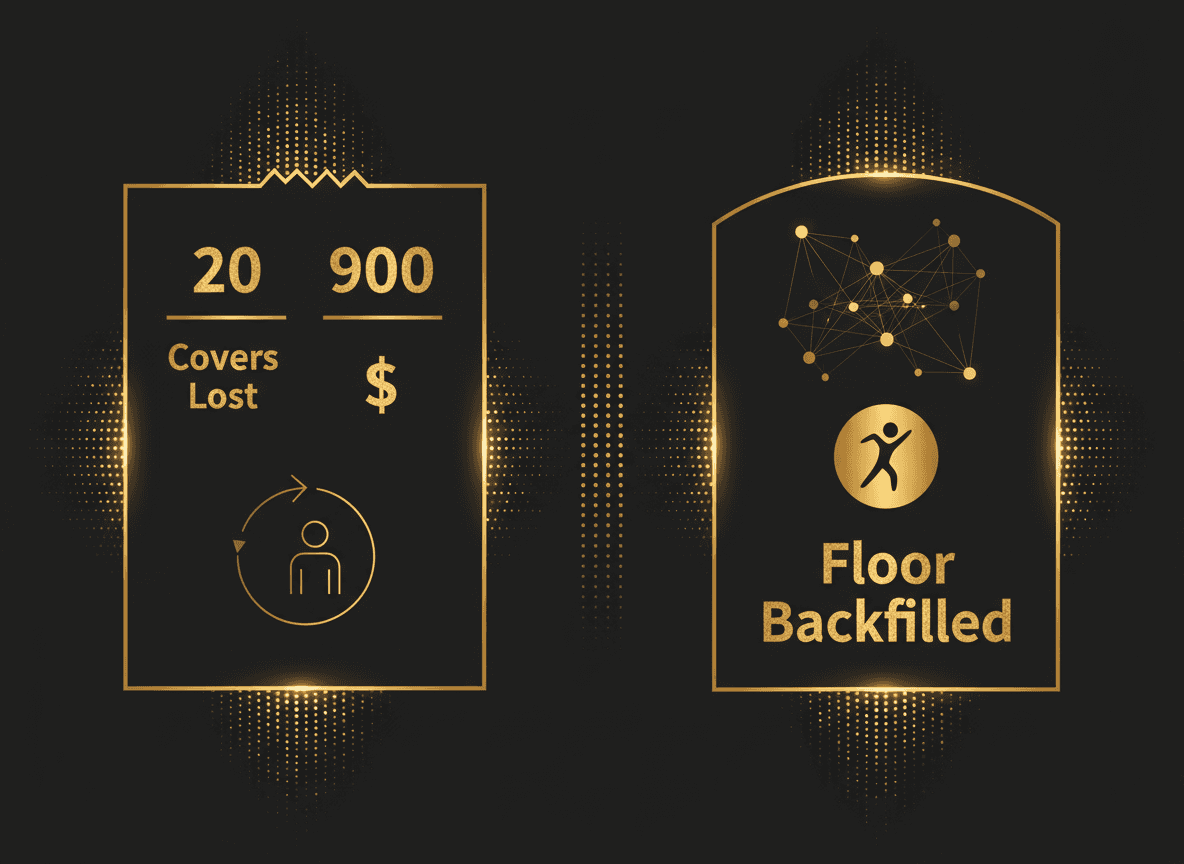
Without the system: two large-party no-shows (say 8 and 6 = 14 covers gone), three walked two-tops from missed calls and cancellations you never backfilled (6 covers), and a waitlist you couldn't work (walk-aways). Call it 20 covers lost. At $45, that's $900 in one night — before drinks, before dessert, before the tip your staff didn't make.
With the system: the big parties either show or forfeit a deposit that covers the hole. Cancellations hit your phone by afternoon and get resold. The waitlist backfills the gaps automatically. You recover most of those 20 covers.
Now imagine that $900 hypothetical repeating across the busy nights on your own calendar. Do the multiplication with your real numbers. For most rooms it's not a rounding error — it's a second location's down payment sitting in tables you already have.
And here's the part nobody tells you: this isn't about buying software. Plenty of owners have a booking tool and still bleed covers because it's not configured to enforce deposits, the reminders aren't turned on, and the waitlist isn't wired to the floor. The tool without the system is just another tab you don't check.
The demand is there. You're turning people away on your busiest nights while reserved tables sit empty. That's the most fixable problem in the entire restaurant business.
Stop running your best nights on a paper book and a prayer.
Want to know exactly which covers you're losing and what it's costing you? Run your free Revenue Code Diagnostic — it maps your specific leaks in a few minutes and shows you the revenue hiding in your dine-in room. Then read more breakdowns on the blog or book a pricing call when you're ready to plug them.
Most SaaS founders treat the free trial as a waiting room. The ones converting at 25% or higher treat it as a structured sales system. Here is how to build that system.
Read moreA product roadmap tells you what you are building. A revenue engine tells you whether it is making money. Most SaaS founders only have one of these, and it is the wrong one.
Read more