Blog - The latest articles and news
Stay up-to-date with the latest industry news as our marketing teams finds new ways to re-purpose old CSS tricks articles.
Stay up-to-date with the latest industry news as our marketing teams finds new ways to re-purpose old CSS tricks articles.
by Kingdom Kode Team, Digital Innovation
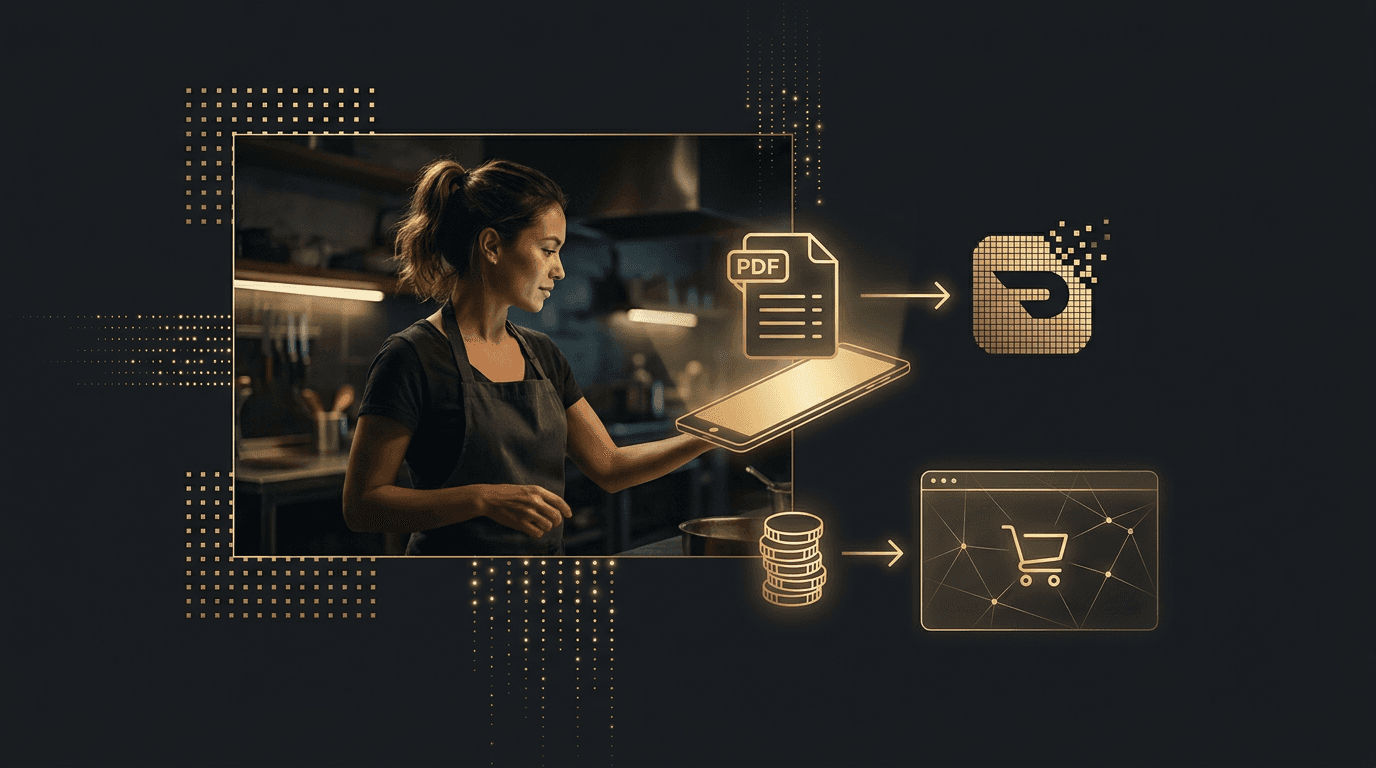
You cut some delivery volume. Good. You got tired of handing 30% to an app that owns your customers.
But here's the expensive problem nobody told you about: without a real online ordering system for restaurants, your website is still sending orders straight to DoorDash. You just don't see it happening.
Here's how it plays out. A hungry local finds your site. They tap "Menu." A PDF opens. They scroll through your food, they get hungry, they decide they want the carne asada plate — and then they hit a wall. There's no button to order it. No way to pay. So they do the obvious thing: they open DoorDash and order from you there. You just paid a commission on a customer who found you first.
That's not a menu. That's a dead-end with a fee attached.
A PDF or a menu image does exactly one job: it shows food. That's it.
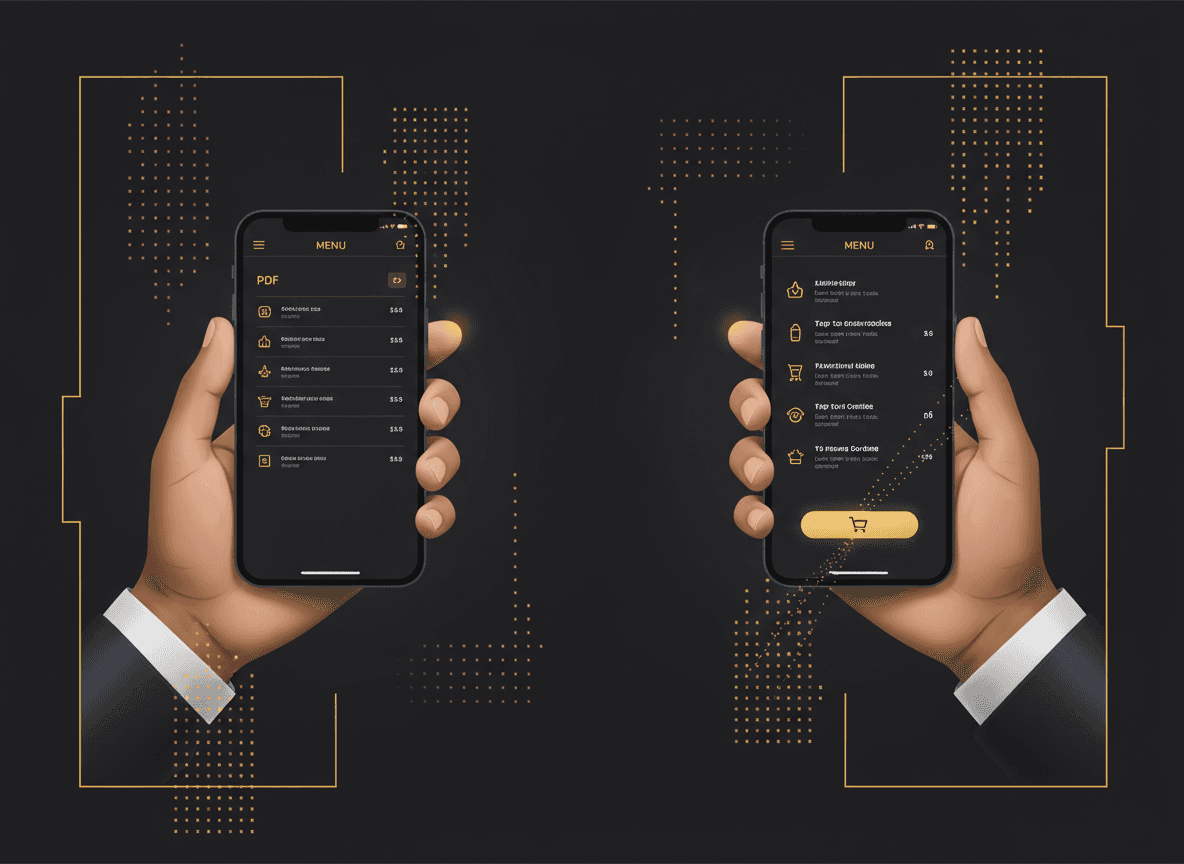
It can't take an order. It can't take a payment. It can't capture a phone number or an email. It can't upsell a drink. It can't say "ready in 20 minutes." It's a photo of your menu taped to the internet.
And the guest who opened it? They're at peak intent. They're hungry right now. That's the single most valuable moment you get — and your site hands them nothing to do with it except leave.
Every restaurant obsesses over the delivery-app fee. Fewer notice the silent leak upstream: guests who wanted to order direct, couldn't, and defaulted to the app anyway. You're paying commission on demand you already generated.
Let's keep it simple. Say you're a cafe or restaurant doing $40k/month, and roughly a third of that — about $13k — comes through delivery apps eating 25-30%.
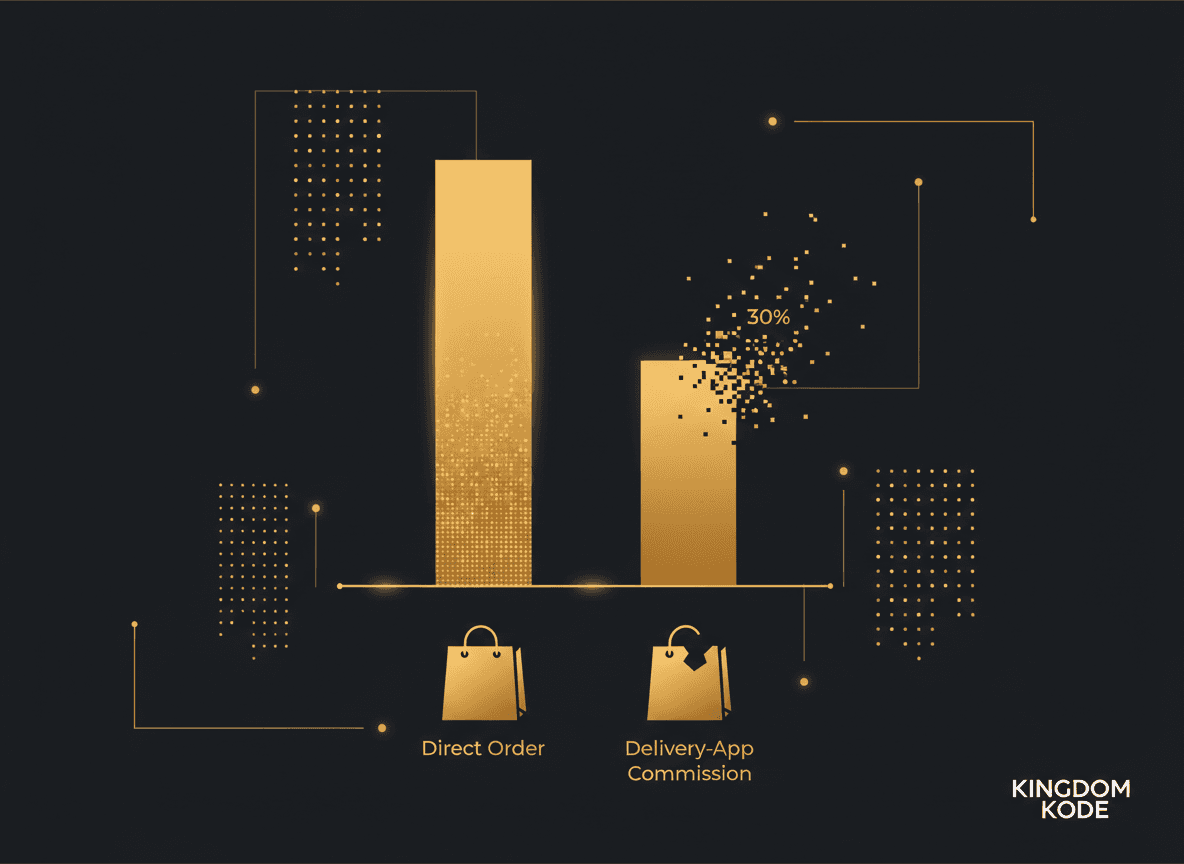
On $13k, that's around $3,500/month gone to fees. $42,000 a year.
Now imagine you recover just 20% of those orders to a first-party ordering flow — guests who found you, wanted you, and would happily order direct if a button existed. That's ~$2,600/month running through your own checkout instead of theirs.
At 20% recovery you save roughly $700-$780/month in fees. That's $8,000-$9,000 a year — for adding an order button and a payment field to a site you already own.
And 20% is conservative. The guests who open your menu directly are the easiest to convert. They didn't stumble in from an app's marketplace. They came looking for you.
The fix isn't complicated. It's a menu people can act on. Here's the difference:
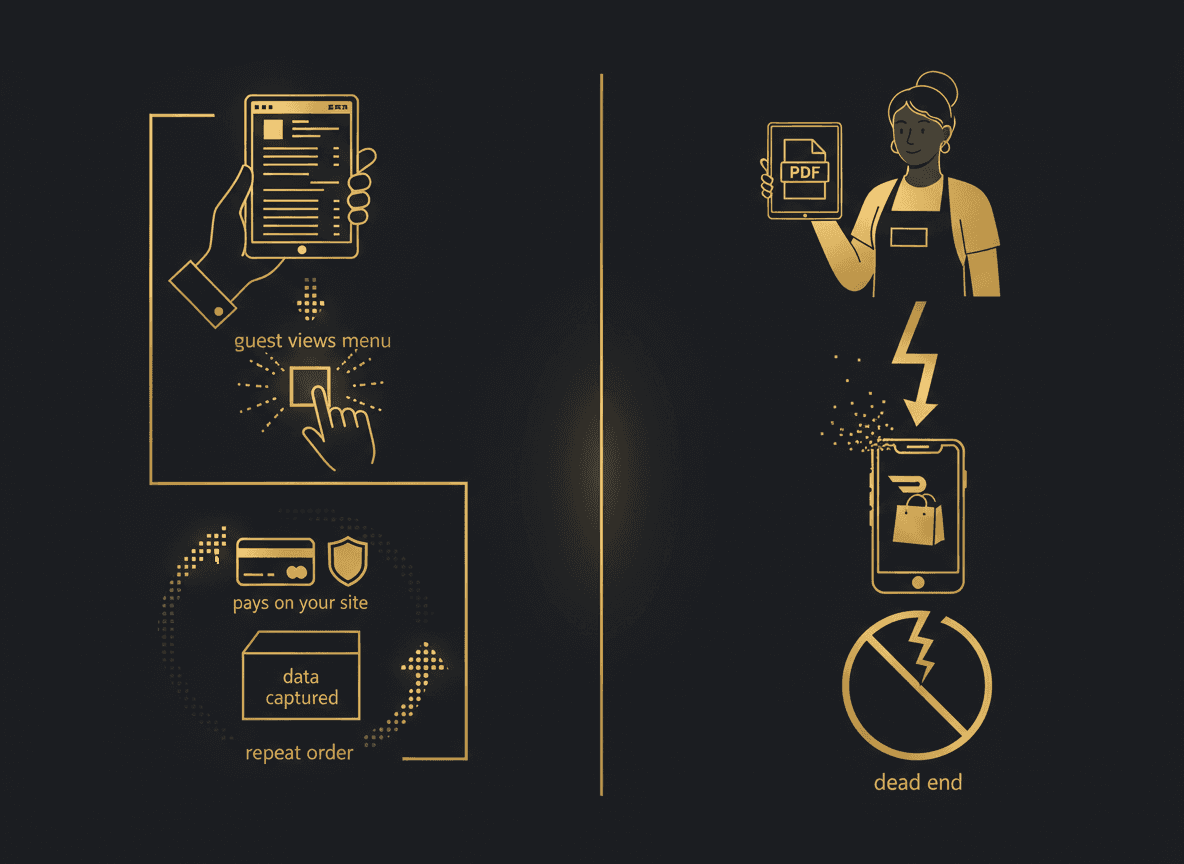
That last one matters more than the fee savings. When a guest orders through DoorDash, DoorDash owns that customer. You get an anonymized ticket. You can't text them a Tuesday special. You can't win them back when they drift.
When they order through your system, you own the relationship. Name, contact, order history, favorite items. That's the asset. That's what turns one order into twelve.
Delivery apps aren't just charging you 30% today. They're charging you the ability to ever reach that customer again without paying again.
A first-party ordering system flips it. Every direct order builds a list of people who already paid you and already liked the food. That list is the cheapest repeat revenue you'll ever have — because you're not renting access to it every time.
Think of it this way: the app rents you a customer once. Your own system buys you a customer for life.
You don't need to rebuild your whole website. You need to bolt a working ordering-and-payment flow onto the site you already have, connected to a menu people can tap instead of squint at.
The pieces:
That's the whole machine. Most restaurants stall because they think it's a giant project. It isn't. It's the missing 20% of your site that turns "looking" into "paid."
Your PDF menu makes people hungry and then sends them to your competitor's checkout — which happens to have your food on it.
Fix the mechanism, and the demand you're already generating starts landing in your account instead of theirs.
Want to know exactly where your site is leaking direct orders — and what recovering them is worth for your specific numbers? Run your free Revenue Code Diagnostic. It maps the gaps in minutes and shows you the revenue on the table.
Want to see how other owners are plugging the same leak? Read more on the blog.
Most SaaS founders treat the free trial as a waiting room. The ones converting at 25% or higher treat it as a structured sales system. Here is how to build that system.
Read moreA product roadmap tells you what you are building. A revenue engine tells you whether it is making money. Most SaaS founders only have one of these, and it is the wrong one.
Read more