Blog - The latest articles and news
Stay up-to-date with the latest industry news as our marketing teams finds new ways to re-purpose old CSS tricks articles.
Stay up-to-date with the latest industry news as our marketing teams finds new ways to re-purpose old CSS tricks articles.
by Kingdom Kode Team, Digital Innovation
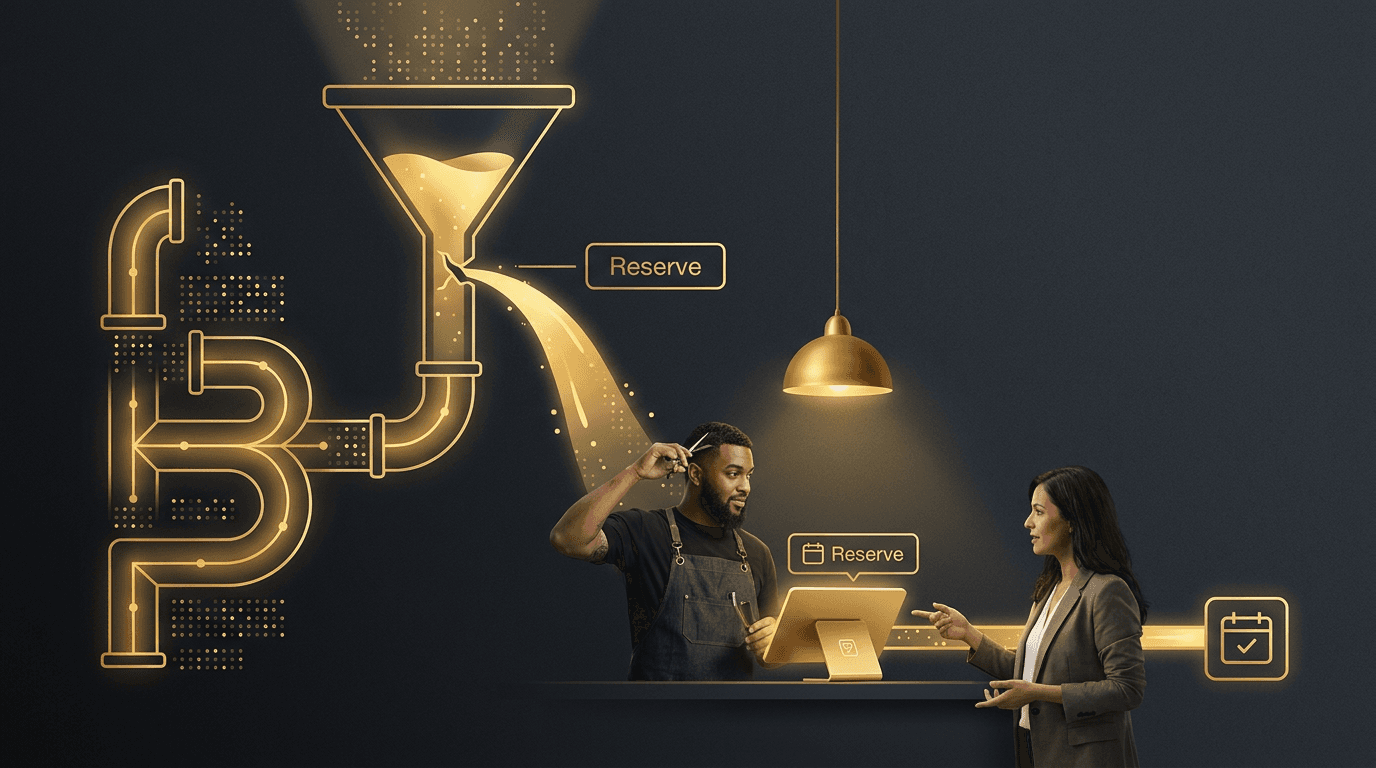
You spent months clawing your way up Google Maps. You bought the citations, chased the reviews, maybe paid an SEO guy $1,500 a month. And now, when someone searches "barbershop near me" at 8:47pm, your profile shows up.
Then they hit your profile and there's no way to book. No button. Just a phone number and a link to a website you haven't updated since 2021.
That's the leak. The reserve with google booking button turns a high-intent lookup into a confirmed, paid appointment on the spot. Without it, you're paying for visibility and letting the sale walk.
When someone finds you on Search or Maps, a "Book" or "Reserve" button appears right on your profile. They pick a service, pick a time, and confirm — without ever leaving Google.
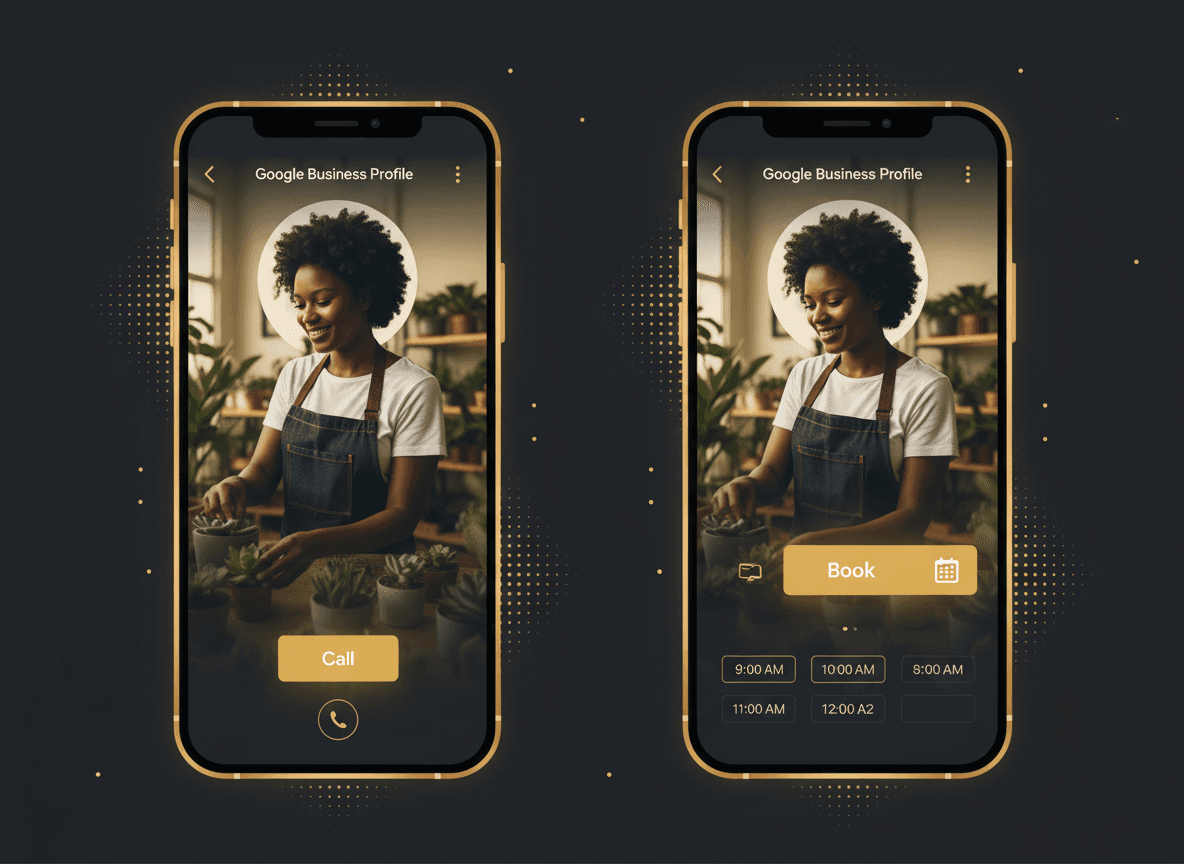
No hunting for your website. No "we'll call you back." No landing on a contact form at 9pm that nobody checks until Tuesday.
The searcher already decided they want what you sell. The button just removes every step between that decision and the booking. That's the whole game.
Here's what actually happens on a phone-only profile.
It's after hours — which is when a huge chunk of local searches happen. Nobody's answering. The searcher isn't going to leave a voicemail and hope. They tap back and book with the shop two spots below you that does have a button.
Or it's business hours and you're mid-appointment, hands full, phone buzzing on the counter. You miss it. They don't call twice.
Phone-only assumes the customer will work around your schedule. High-intent buyers won't. They'll pick the path of least resistance every single time, and Google puts three competitors right next to you on the same screen.
Intent has a half-life. The moment someone searches, they're at peak readiness to book. Every extra step — every tap, every load, every "we'll get back to you" — bleeds that intent.
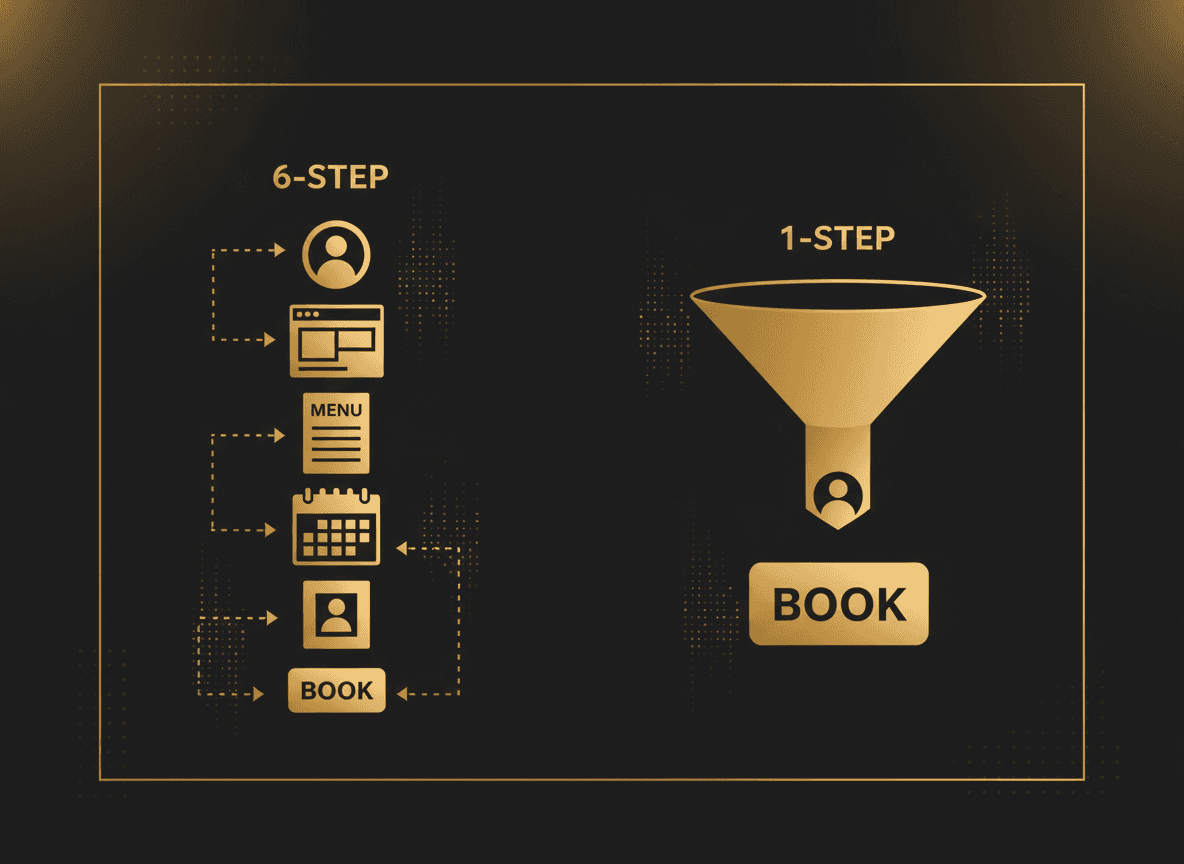
Profile → website → menu → find booking page → create account → book. That's six steps. Half your people are gone by step three.
Profile → book. That's one step.
Run it on a med spa doing $40k/mo. If the profile pulls 400 clicks a month and you convert 4% because of friction, that's 16 bookings. Cut the friction and convert 12% — that's 48 bookings from the same traffic. You didn't spend a dollar more on visibility. You just stopped leaking.
This is where most owners get it half-right. They add a booking link, but it points to a clunky tool that double-books, doesn't take deposits, and sends zero reminders.
A booking button without a real backend just relocates the chaos.
What converts and protects your calendar:
The button is the front door. The booking-plus-payments system is the house. A door to nothing doesn't help you.
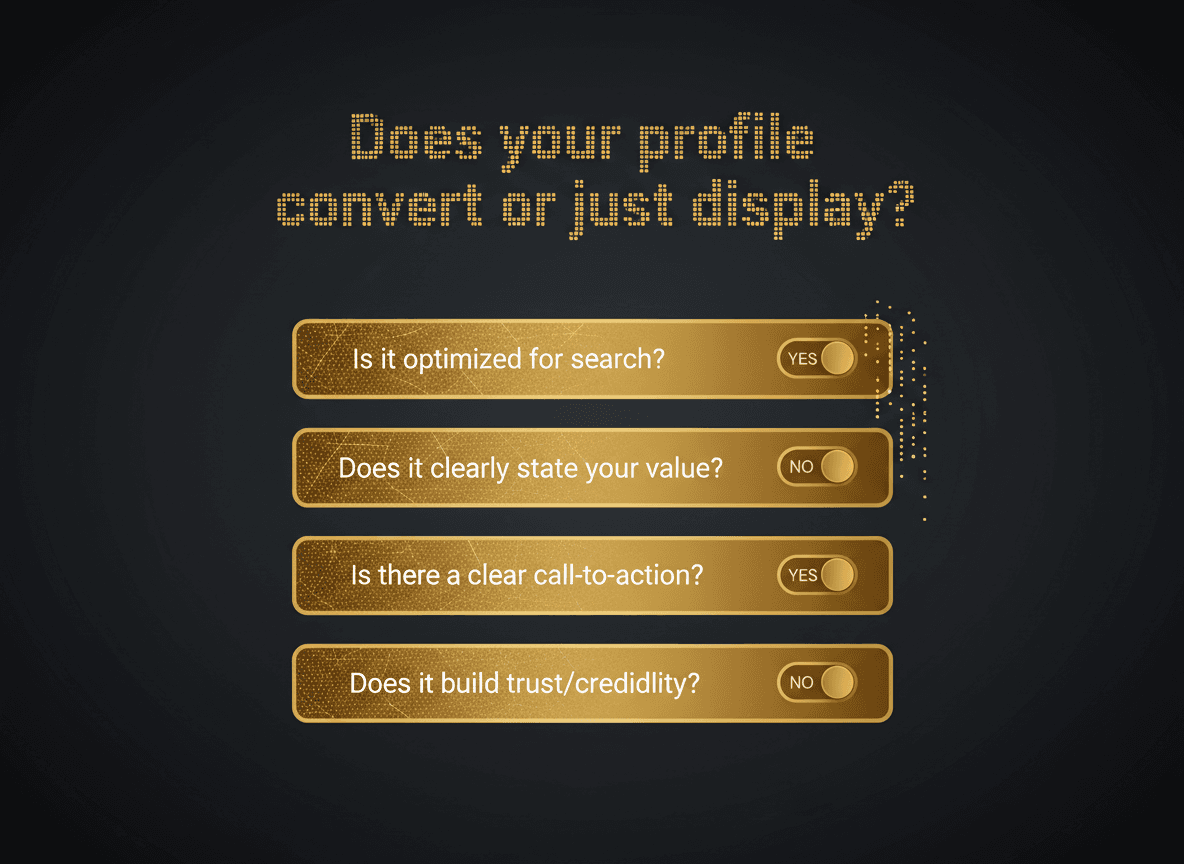
Open your own Google Business Profile on your phone right now. Then ask:
If you answered "no" to any of these, your profile is a billboard, not a salesperson. It shows up. It doesn't close.
Ranking is the ante. Converting is the money. Most owners are winning the first and losing the second, then blaming the algorithm.
You already did the hard part — you're visible. The gap between where you are and a full calendar is usually one booking action and a backend that doesn't drop the ball.
We built the free Revenue Code Diagnostic to check exactly this: does your Google presence convert, or does it just display? It flags where high-intent traffic is leaking and what to fix first.
Run your free Revenue Code Diagnostic. It takes a few minutes and tells you whether your profile is earning its ranking. Want to see more teardowns like this? Head to the blog.
Most SaaS founders treat the free trial as a waiting room. The ones converting at 25% or higher treat it as a structured sales system. Here is how to build that system.
Read moreA product roadmap tells you what you are building. A revenue engine tells you whether it is making money. Most SaaS founders only have one of these, and it is the wrong one.
Read more