Blog - The latest articles and news
Stay up-to-date with the latest industry news as our marketing teams finds new ways to re-purpose old CSS tricks articles.
Stay up-to-date with the latest industry news as our marketing teams finds new ways to re-purpose old CSS tricks articles.
by Kingdom Kode Team, Digital Innovation

Every night after you lock up, your phone stops ringing. But the demand doesn't stop. Someone finds you on Google at 9:47 PM, ready to book. They hit call. Voicemail. They hang up and book the next business on the list. That's the hidden tax of running scheduling by phone or DM — and it's exactly why an online booking system for small business isn't a "nice to have." It's the difference between capturing that 9:47 PM lead and handing them to your competitor for free.
You're not losing customers because your work is bad. You're losing them because you're only open for bookings when you're awake, standing near a phone, and not already elbow-deep in a job.
Leak 1: After-hours demand goes dark. A big chunk of people search and decide outside your business hours — nights, lunch breaks, weekends. If the only way to book is a live human answering a phone, every one of those moments is a maybe instead of a yes. Maybes don't pay.
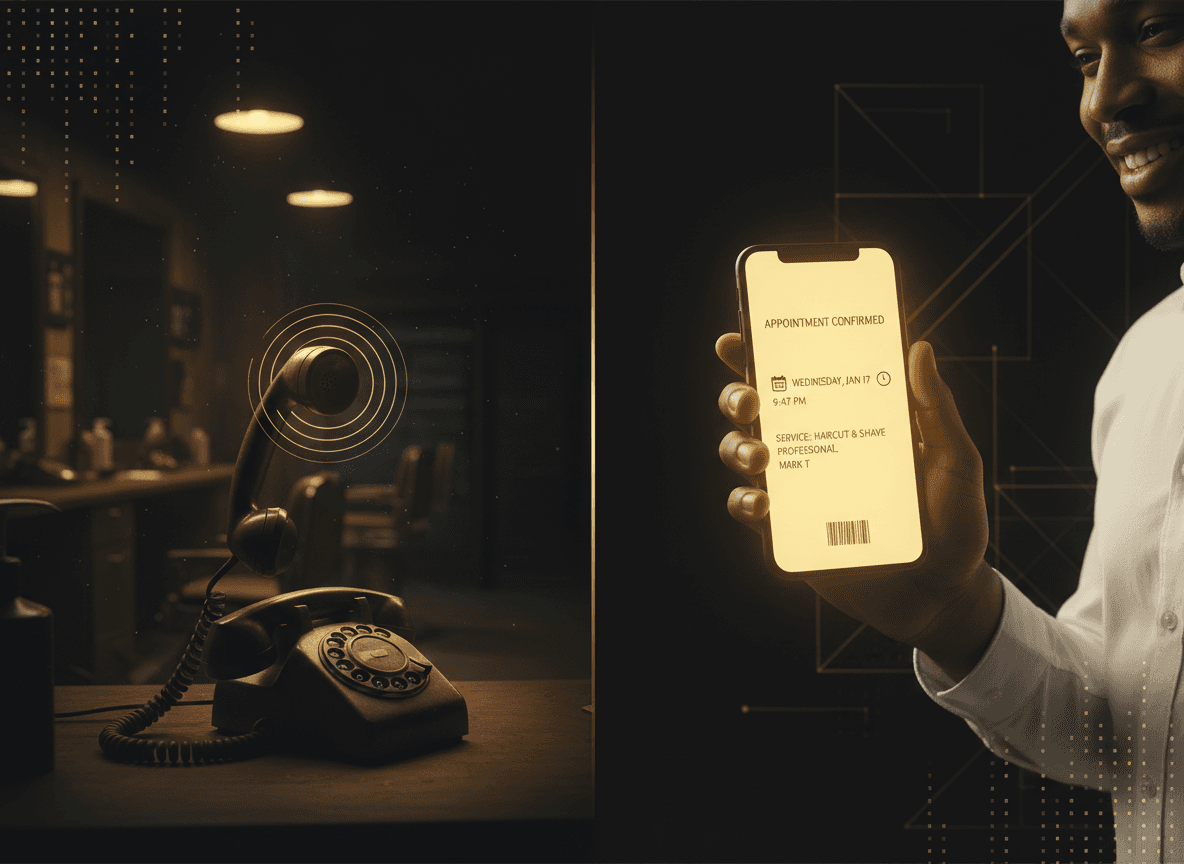
Leak 2: Phone tag eats your staff. Count the callbacks. "Hey, returning your call." Voicemail. They call back. You're busy. Repeat. It's easy for a single booking to eat 3-4 touches and 15 minutes of labor before anyone's on the calendar. Multiply that across a week and you're paying someone to play tag instead of serve customers.
Leak 3: "We'll call you back" is a booking you already lost. The moment a lead has intent, every hour of delay cools them off. A competitor with instant online booking closes them while your callback is still on a sticky note. Speed to booking wins. Phones make you slow.
Let's make this concrete. Say you're a salon or home service shop doing $30k/mo with an average ticket of $80.
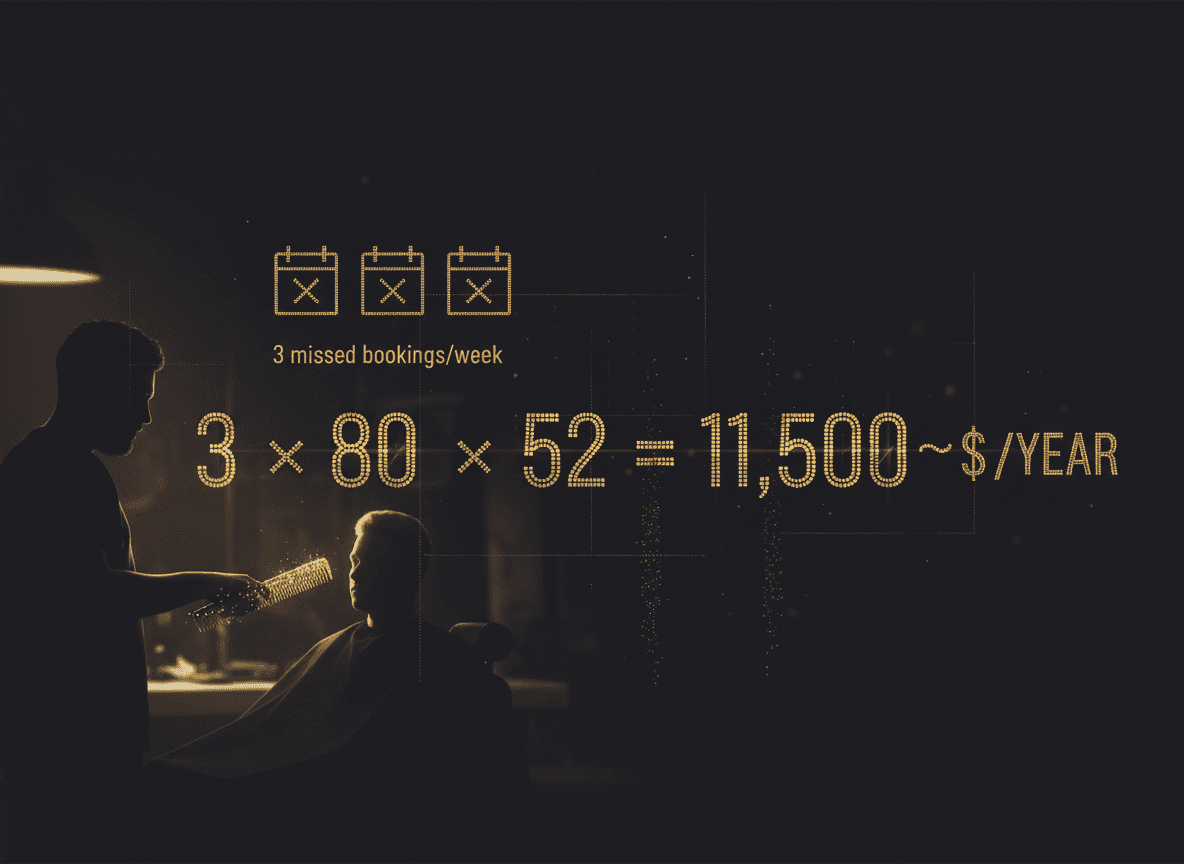
Imagine just 3 people a week try to book after hours and give up because they hit voicemail or don't want to leave a DM and wait. That's 12 lost bookings a month. At $80, that's $960/mo — roughly $11,500 a year — walking out the door before you even wake up.
That's the conservative version. For a lot of operators the after-hours window is where most of the searching happens. The number climbs fast.
Now flip it. A self-serve booking page that's open 24/7 captures those bookings automatically. No callback. No phone tag. The customer picks a slot, gets a confirmation, and shows up. You did zero manual work and kept the money.
That's the point: online booking doesn't just save time. It captures revenue you're currently throwing away in your sleep.
Booking is the entry point. The real leverage shows up when the whole flow is connected.
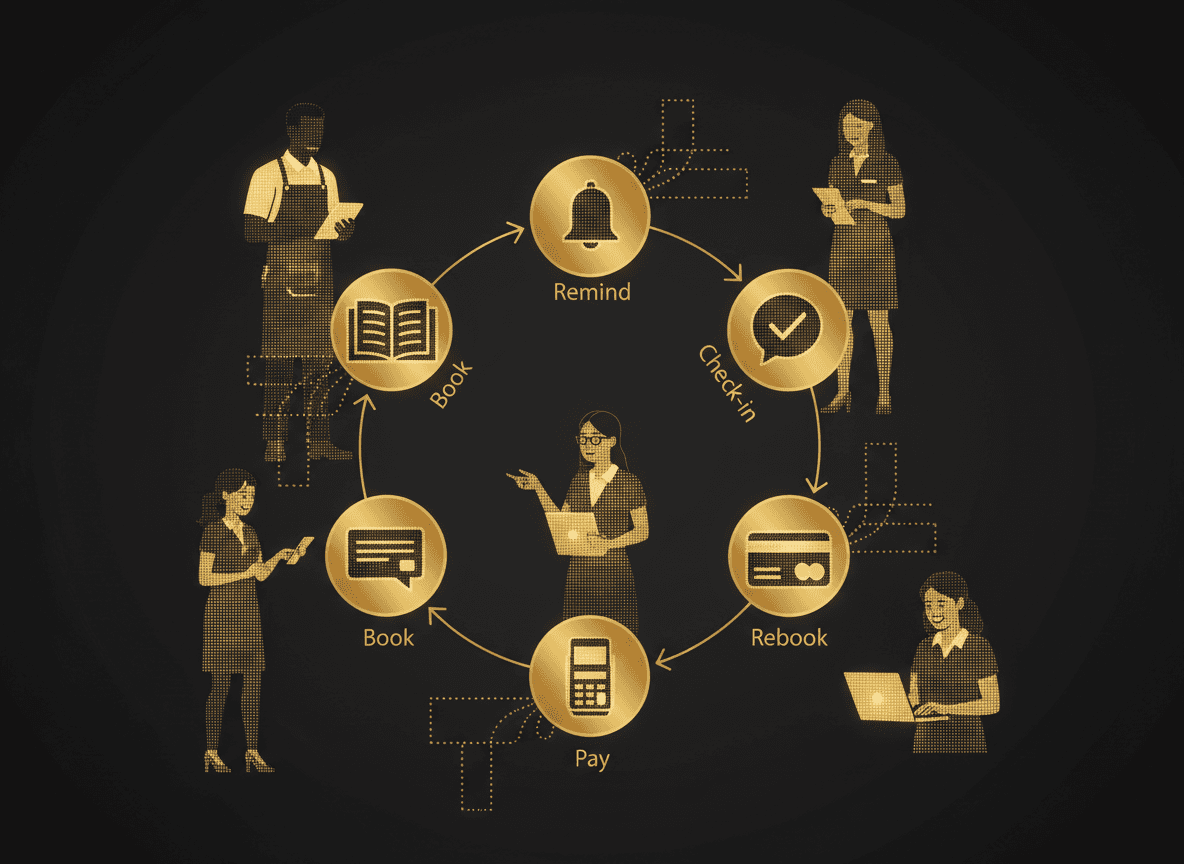
Each piece is worth something on its own. Together they compound. You're not just booking more — you're keeping more, upselling more, and turning one-time visits into repeat revenue without adding staff.
Here's the reframe that changes how you spend on this.
Most owners file online booking under "convenience" — a small upgrade to be nice to customers. Wrong category. Booking is the front door of your revenue. If the front door is only open when you're standing next to it, your revenue is capped by your personal availability. That's not a business. That's a job with overhead.
Infrastructure means the system captures, confirms, reminds, and collects — whether you're on a ladder, cutting hair, or asleep. It runs at 2 AM. It runs when you're on vacation. It doesn't take lunch.
When you treat booking as infrastructure, you stop asking "can I afford this?" and start asking "how much am I losing every month I don't have it?"
You already know the leaks are there. The question is how big they are — and which one is bleeding you fastest.
That's exactly what the diagnostic is for. Run your free Revenue Code Diagnostic and get a clear read on where your booking process is losing money and what fixing it is worth. No pitch, just the numbers.
Want more breakdowns like this? Browse the blog or reach out if you're ready to plug the leaks for good.
Most SaaS founders treat the free trial as a waiting room. The ones converting at 25% or higher treat it as a structured sales system. Here is how to build that system.
Read moreA product roadmap tells you what you are building. A revenue engine tells you whether it is making money. Most SaaS founders only have one of these, and it is the wrong one.
Read more