Blog - The latest articles and news
Stay up-to-date with the latest industry news as our marketing teams finds new ways to re-purpose old CSS tricks articles.
Stay up-to-date with the latest industry news as our marketing teams finds new ways to re-purpose old CSS tricks articles.
by Kingdom Kode Team, Digital Innovation
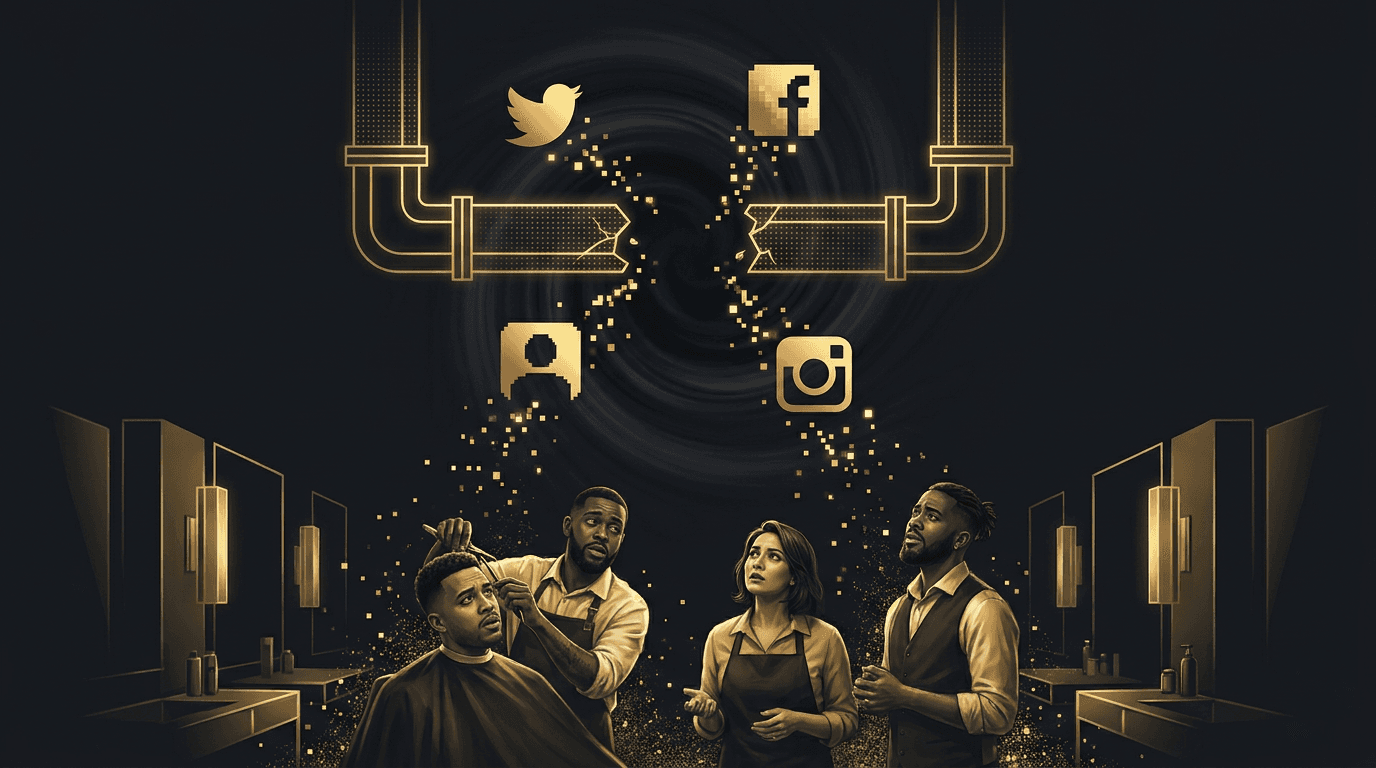
You spun up a Facebook page in 2019. An Instagram in 2021. A TikTok because your nephew said so. A LinkedIn you've logged into twice. Somewhere there's a Pinterest and a YouTube with three videos. Congratulations — you've collected profiles. You haven't built a brand. And inconsistent branding across social media is one of the quietest, most expensive leaks in a small business.
It doesn't show up on a P&L line. Nobody emails you to say "I didn't book because your logo looked different and I couldn't find your hours." They just leave. And you never know they were there.
Put yourself in the prospect's shoes. They hear about you. They Google you. They find four profiles.
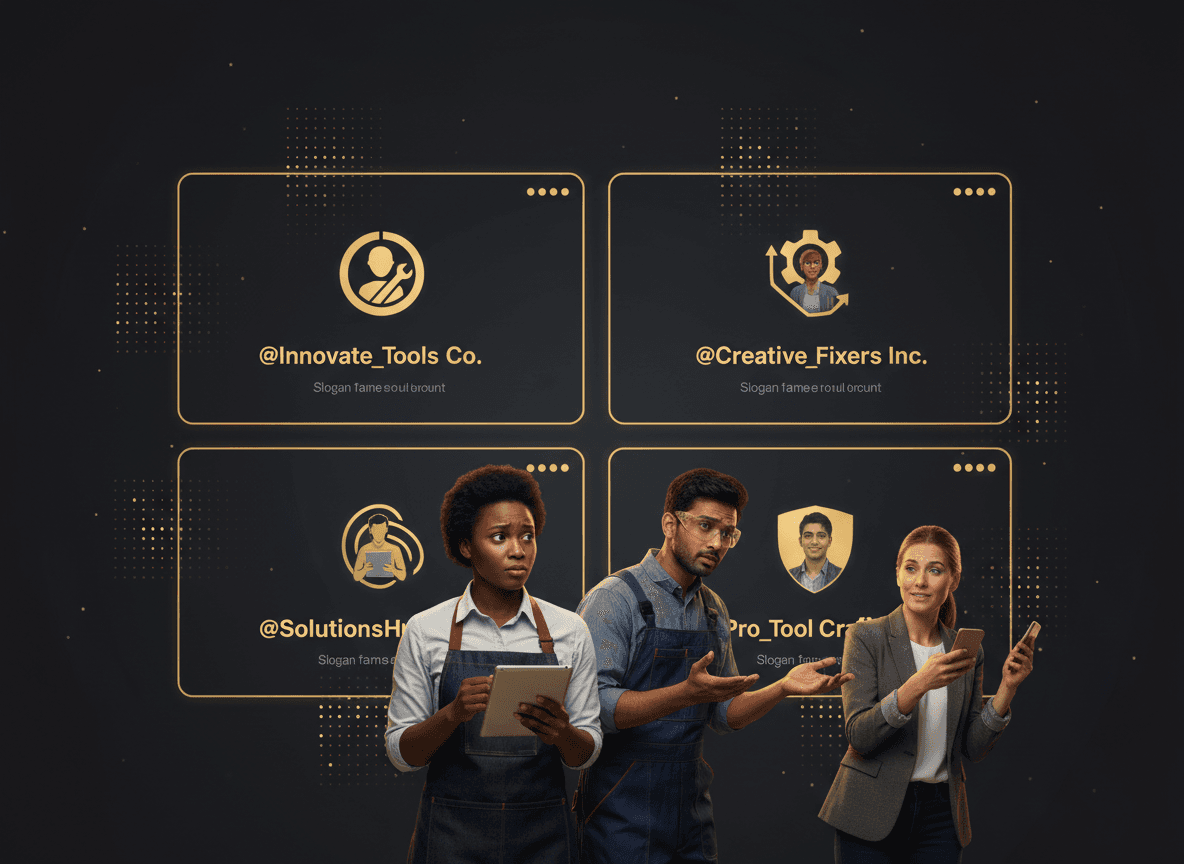
@joesbarbers.@joe_cuts_2020.Each one looks like a different business. One says you open at 9. Another says 10. The booking link on Instagram is a dead Linktree. Facebook sends them to a "Message us" button nobody checks.
A customer ready to give you money now has to do detective work. Most won't. They'll click the competitor whose name, photo, and "Book Now" button match on every surface. That competitor didn't win because they're better. They won because they looked managed.
Here's the mechanic. Every mismatch is a micro-hesitation. Hesitation compounds.
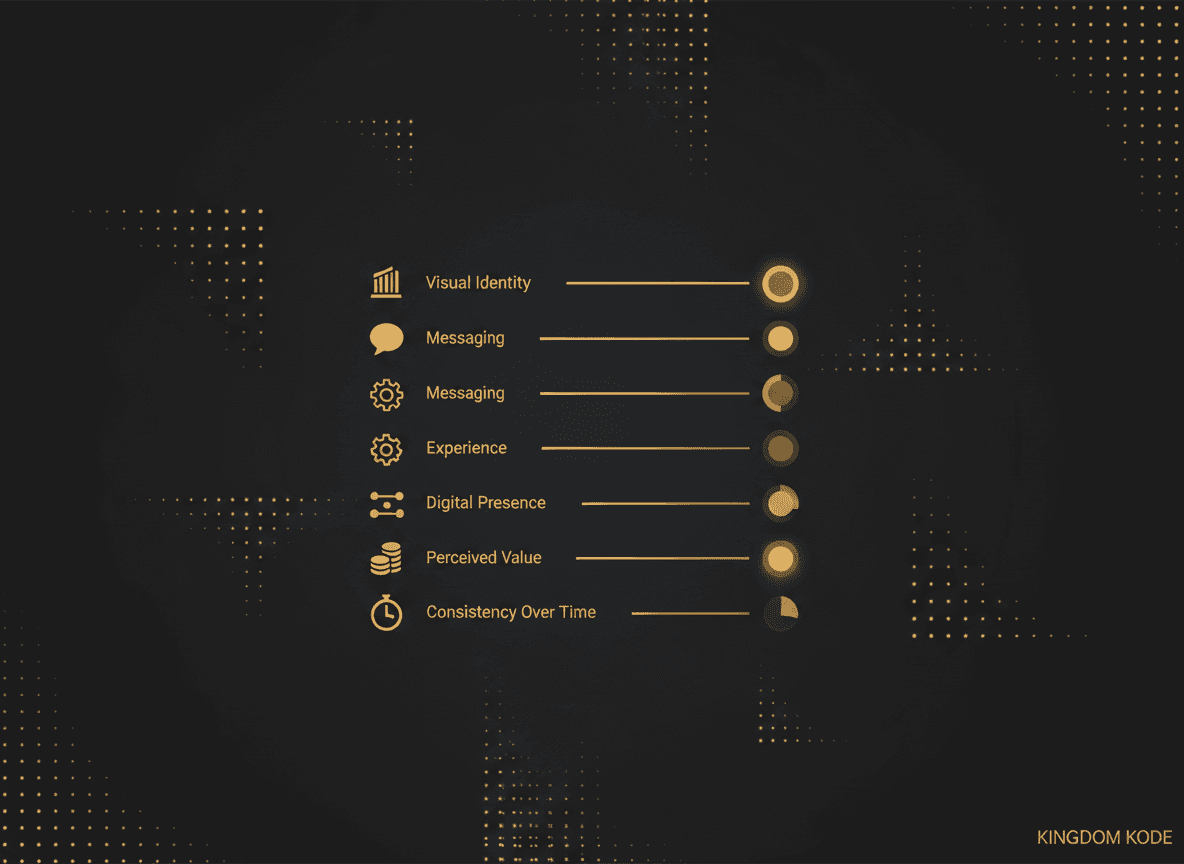
A prospect who lands on a clean, consistent profile makes one decision: book or not. A prospect who lands on your scattered mess makes five decisions first: Is this the right place? Are these the current hours? Is this link even real? Do they still exist? Why does everything look different?
Every extra decision is a chance to bounce. That's the trust tax — not a made-up percentage, just the plain physics of attention. Confusion is friction, and friction near the buy button is the most expensive friction you have.
Think about a barbershop doing $30k/mo — purely as an illustration. If a handful of ready-to-book customers a week silently bounce because your brand looks abandoned, you're not losing pennies. You're losing the highest-intent traffic you'll ever get — people who already wanted you.
Run this today. Open every profile you own side by side. Score each row pass/fail.
1. Name. Is the exact business name identical everywhere? Not "close." Identical. "Joe's Barbershop" ≠ "Joe's Barber Shop & Co."
2. Handle. Is your username the same across platforms, or as close as the platform allows? @joesbarbershop everywhere beats a different alias per app. Consistency is findability.
3. Logo & profile photo. Same mark, same crop, same colors. One current logo. If three eras of your logo are live right now, pick one and purge the rest.
4. Hours. Do your hours match across Google, Facebook, Instagram, and your site? Wrong hours don't just confuse — they generate one-star reviews from people who showed up to a locked door.
5. Booking link. Does every profile point to the same working booking destination in one click? Test each link on your phone. Dead links are lost money.
6. Bio / one-liner. Does each profile say the same thing about who you serve and what you do? A prospect should read any bio and instantly know they're in the right place.
If you failed even two rows, you're leaking. Most owners fail four or five and don't know it because they never look at their own profiles as a stranger would.
Everything above matters, but the booking link is the wound. You can have perfect logos and matching hours, and still lose the sale if the path to "book now" is broken, buried, or different on every platform.
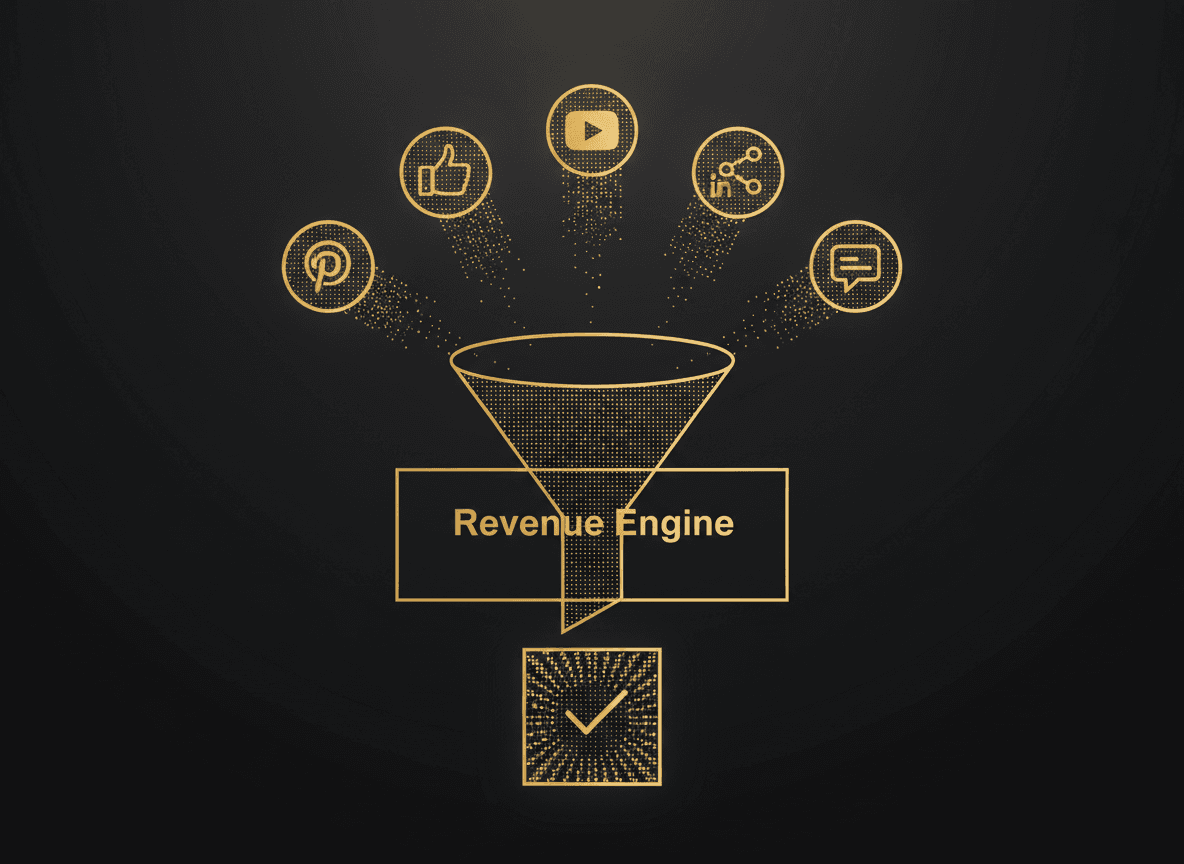
The rule: one booking destination, reachable in one tap, from every profile you own. No dead Linktrees. No "DM us to schedule." No calling during business hours only. The whole point of seven profiles is to funnel attention into one place that converts. If those funnels leak, the profiles are just decoration.
The fix isn't "post more." It's consolidation. Your seven profiles should be seven front doors into one customer journey: consistent brand → one clear message → one working booking link → one system that captures and confirms the appointment.
That's what turns scattered social presence into a Revenue Engine. The profiles become traffic sources. The engine does the converting. You stop being a full-time social media manager for a business you're supposed to be running.
Most owners don't need more platforms. They need the ones they have to point at the same thing and actually close. You can read more breakdowns like this on the blog, or reach out directly through contact if you want a human to look at it.
You can run the six-point audit above yourself — genuinely, do it. But if you want to see exactly where your brand is leaking trust and bookings, and what a single consolidated Revenue Engine would look like for your business, that's what we built the diagnostic for.
Run your free Revenue Code Diagnostic. It's free, it's fast, and it names the leak so you can stop paying the trust tax.
Most SaaS founders treat the free trial as a waiting room. The ones converting at 25% or higher treat it as a structured sales system. Here is how to build that system.
Read moreA product roadmap tells you what you are building. A revenue engine tells you whether it is making money. Most SaaS founders only have one of these, and it is the wrong one.
Read more