Blog - The latest articles and news
Stay up-to-date with the latest industry news as our marketing teams finds new ways to re-purpose old CSS tricks articles.
Stay up-to-date with the latest industry news as our marketing teams finds new ways to re-purpose old CSS tricks articles.
by Kingdom Kode Team, Digital Innovation
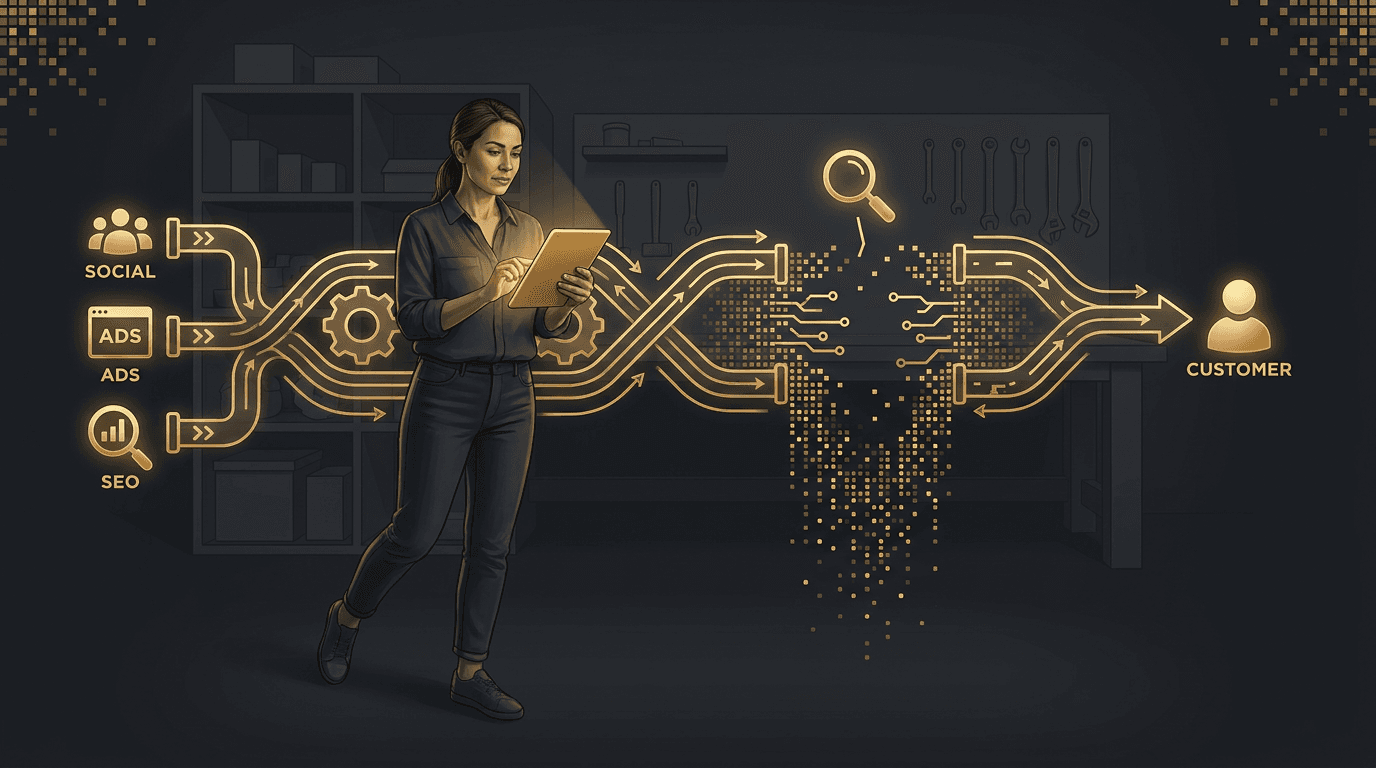
You spend on Facebook ads. You post on Instagram. You paid a guy for SEO. The phone rings, people book, money comes in.
Now answer one question: which of those channels actually produced a paying customer this month?
If you can't answer that with a number, you're paying a silent tax on every marketing dollar. This post is about how to track where customers come from as a small business — and why guessing is quietly draining your budget.
Here's the mistake almost every owner makes: they judge marketing by activity instead of by booked, paying customers.
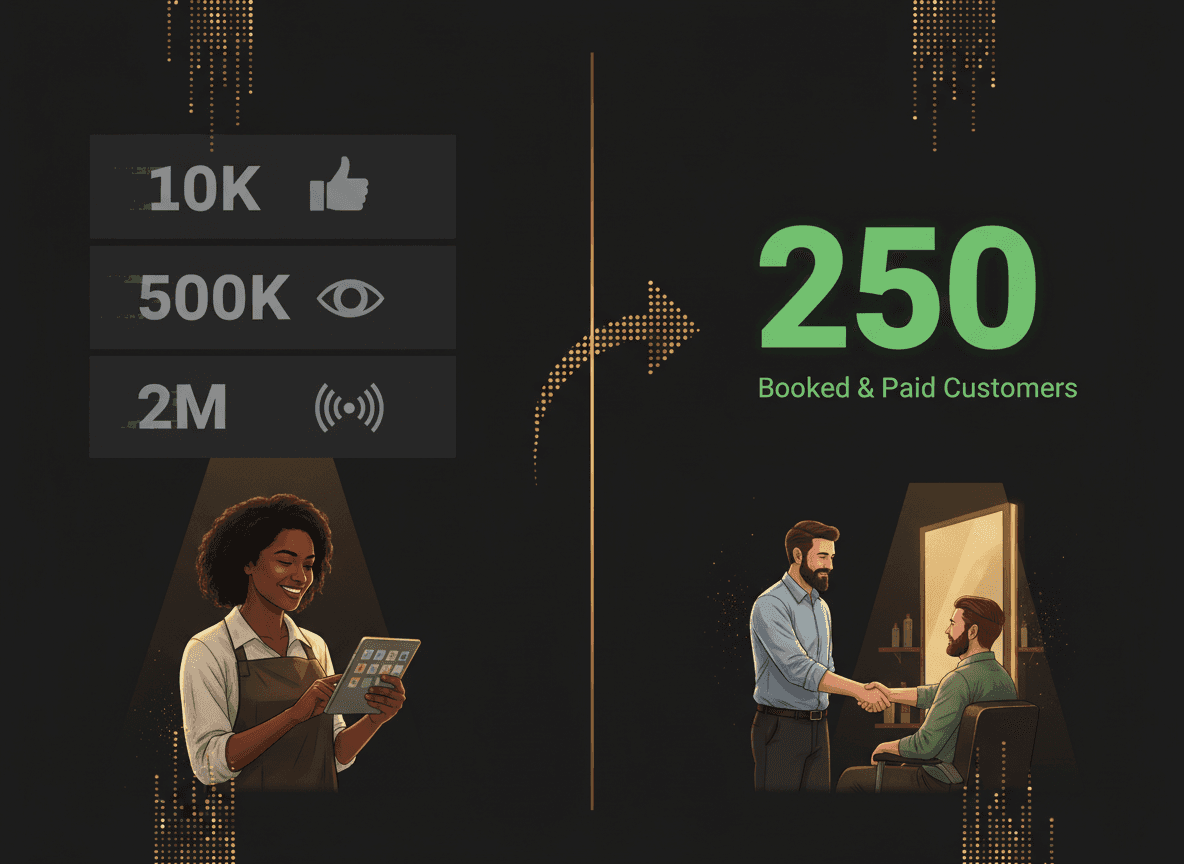
"The ad got 40,000 impressions." Cool. How many booked?
"The reel hit 12,000 views." Great. How many paid you?
"Traffic is up 30%." Up 30% in what — window shoppers or revenue?
Traffic, likes, and impressions are the top of a funnel. Revenue is the bottom. Between them is a leak, and the leak is where your money either converts or dies.
A barbershop doing $30k/mo might get 2,000 website visits a month. If 60 of those turn into booked cuts, the other 1,940 are noise. Judging your marketing by the 2,000 instead of the 60 is how you end up funding the wrong channel for a year straight.
The only metric that matters: which source produced a booked, paying customer — and what it cost to get them.
Most owners think they know their best channel. Ask them and they'll say "word of mouth" or "probably Instagram."
That's a feeling, not data. And feelings are expensive.
Here's why the phone ringing tells you nothing:
When you can't trace the path, you make cuts based on vibes. You kill the ad that was actually feeding everything else, keep the channel that was just catching credit, and wonder why revenue slid.
That's the attribution blind spot. It doesn't just waste money — it makes you cut the wrong things with total confidence.
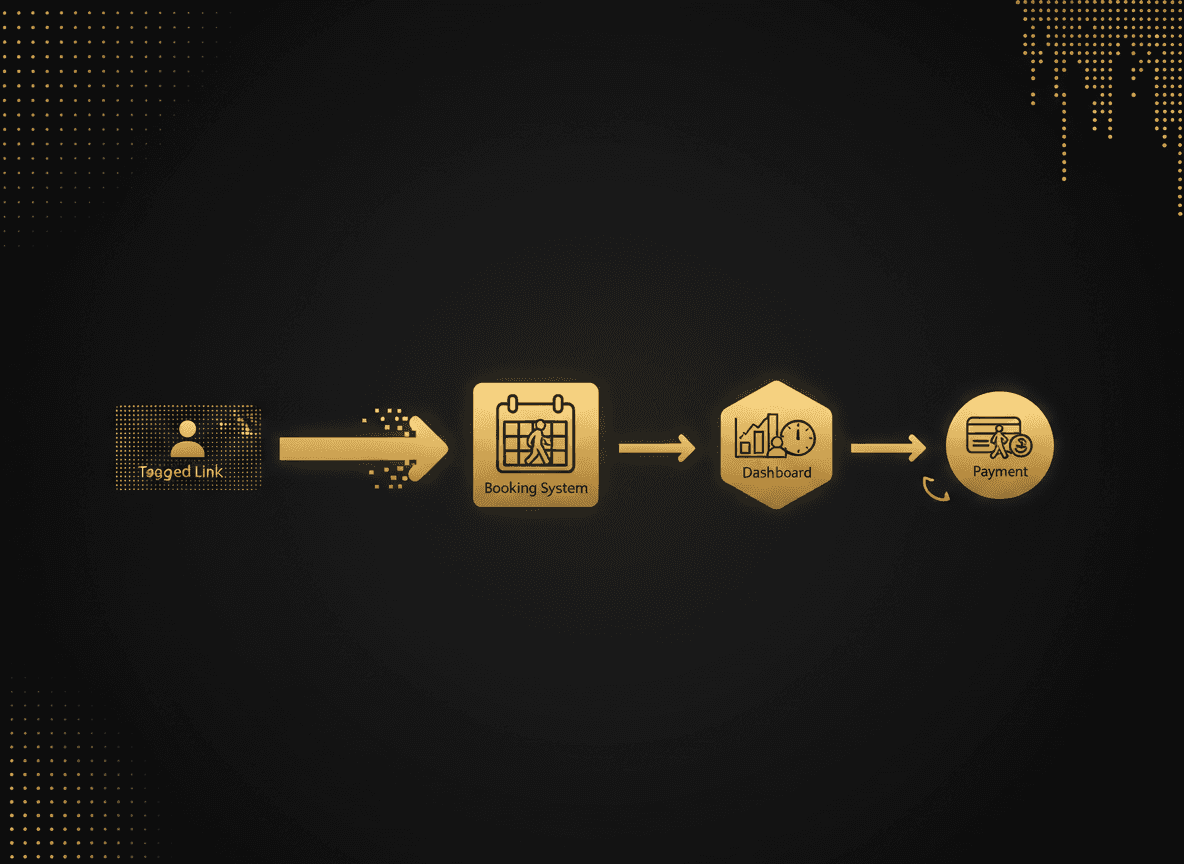
Tracking source-to-booking isn't magic. It's plumbing. You need four pieces connected so a customer's origin follows them all the way to the sale.
1. Tagged links on every channel. Every ad, every bio link, every email uses a UTM tag or a unique tracking link. Now a click carries its source with it instead of showing up as anonymous "direct traffic."
2. A booking system that captures the source. When someone books, the source rides along into the record. If you use a call, use call tracking numbers or a simple "How did you hear about us?" field that's required, not optional.
3. A single place where clicks meet bookings. Traffic data lives in one tool, bookings in another, payments in a third. Connected, you can finally see: this source → this many bookings → this much revenue.
4. Payment data tied back to source. A booking isn't revenue until it's paid. Tie the paid transaction back to the origin and you've closed the loop from click to cash.
Most businesses have pieces one and two floating around disconnected. The money is in wiring them together so one number falls out the bottom.
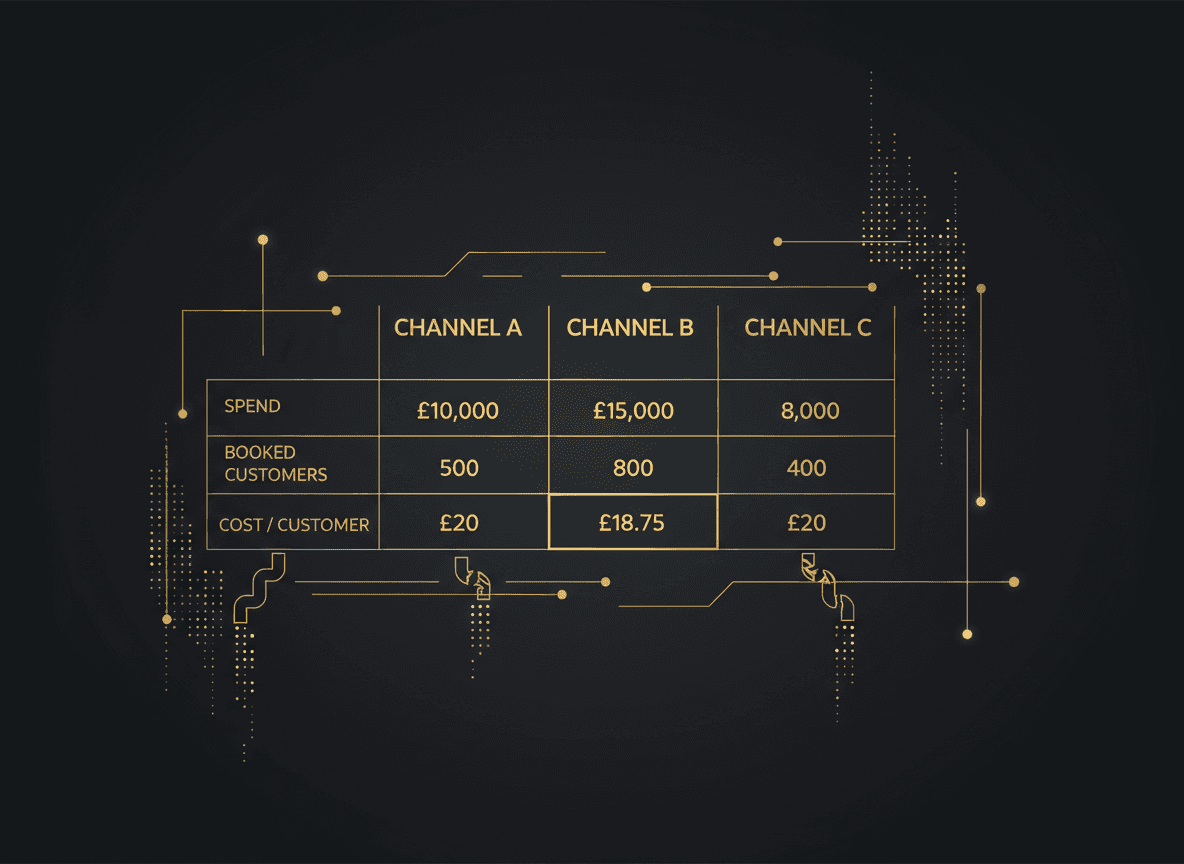
Cost-per-booked-customer, by source.
Not cost per click. Not cost per lead. Cost per customer who actually paid you, broken out by where they came from.
Simple version: take what you spent on a channel, divide by the number of paying customers it produced.
Now the fog clears. Instagram isn't "working" just because it's busy — it's costing you 3x per customer what SEO does. Maybe you fix the Instagram funnel. Maybe you shift the spend. But now you're deciding with a number, not a hunch.
Compare that to average customer value. If a customer is worth $250 to you over a year, a $40 or even $100 acquisition cost is a machine you want to feed. A channel costing $300 per customer is a bucket with a hole.
Once you can see cost-per-booked-customer by source, the moves get obvious:
Without attribution, you'd have done the opposite: cut the quiet-but-profitable channel and poured money into the loud one. That single wrong call, repeated monthly, is the tax.
Guessing feels free. It isn't. It's the most expensive line item you're not tracking.
You don't need more marketing. You need to know which marketing already works — and then feed it.
If you can't currently say which channel produced your last 10 paying customers, that's the leak to plug before you spend another dollar.
Run your free Revenue Code Diagnostic. It pinpoints exactly where your booking and tracking stack is leaking revenue and where your marketing dollars are disappearing. No guessing, just the numbers.
Want more breakdowns like this? Read the other articles on the blog or get in touch if you're ready to wire your stack together.
Most SaaS founders treat the free trial as a waiting room. The ones converting at 25% or higher treat it as a structured sales system. Here is how to build that system.
Read moreA product roadmap tells you what you are building. A revenue engine tells you whether it is making money. Most SaaS founders only have one of these, and it is the wrong one.
Read more