Blog - The latest articles and news
Stay up-to-date with the latest industry news as our marketing teams finds new ways to re-purpose old CSS tricks articles.
Stay up-to-date with the latest industry news as our marketing teams finds new ways to re-purpose old CSS tricks articles.
by Kingdom Kode Team, Digital Innovation

You think your problem is not enough reviews. It's not.
Your problem is a profile full of mixed sentiment with zero owner responses. A 4.1 with three unanswered one-star rants reads worse than a fresh page with nothing on it. Because a blank page says "new." A neglected page says "this owner stopped caring." If you've ever googled how to respond to negative reviews for my business and closed the tab because it felt like too much work, this is the post that fixes it.
You're not managing a rating. You're managing the last thing a buyer sees before they book you or your competitor.
Here's the math nobody tells you.
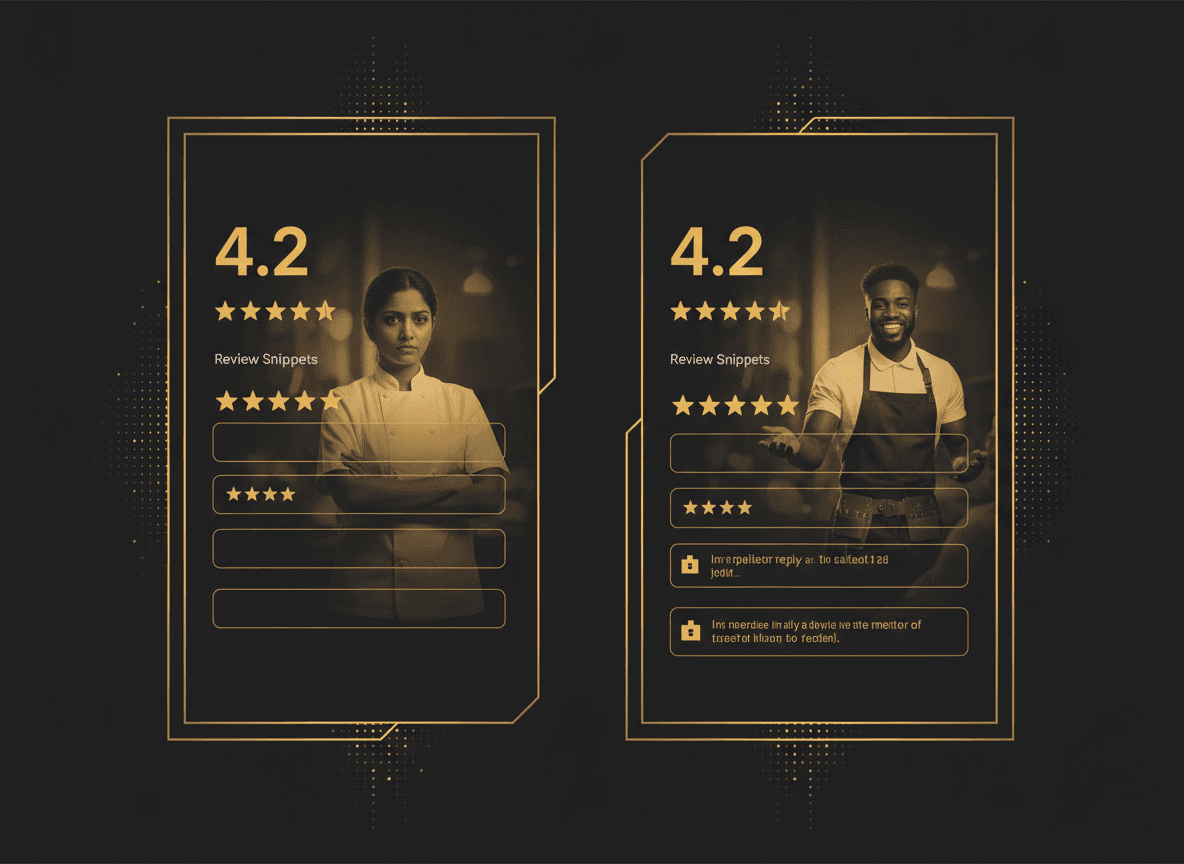
A customer finds you on Google, Yelp, Fresha, whatever. They don't read the star number. They read the bad reviews first. Everyone does. It's human. We're checking if the horror stories are real.
Now imagine a barbershop doing $30k/mo with a 4.2 rating. Under the two worst reviews: silence. No reply. No "we're sorry, here's what happened." Nothing.
That silence tells the buyer two things:
You didn't lose the booking because of one angry customer. You lost it because you never showed up to the conversation.
Spread that across 6+ platforms with fragmented, unmanaged sentiment and you've got a reputation that leaks bookings every single day — and you never see the invoice.
Stop writing responses to the angry customer. They're already gone. Write every response for the 200 future buyers reading it.

A clean negative-review reply does four things in under 60 words:
Example. Bad reply: "We're sorry you feel that way, we always strive for excellence." That's corporate nothing. It reads as guilty.
Good reply: "You waited 25 minutes past your appointment — that's on us and it's not our standard. We've adjusted how we book Saturdays so it doesn't happen again. I'd like to make it right; call me directly at [number]. — Marcus, owner."
See the difference? The second one makes the future reader trust you more than a five-star review would.
Never argue. Never post the customer's private details. Never write a wall of text. Calm, specific, owned, done.
Speed is the signal. A reply three months late looks like damage control. A reply in two days looks like you run a tight ship.
Set this cadence and don't break it:
The goal isn't perfection. It's presence. An owner who visibly answers is worth more than a half-star bump.
The best negative-review strategy is stopping the review from being public in the first place.
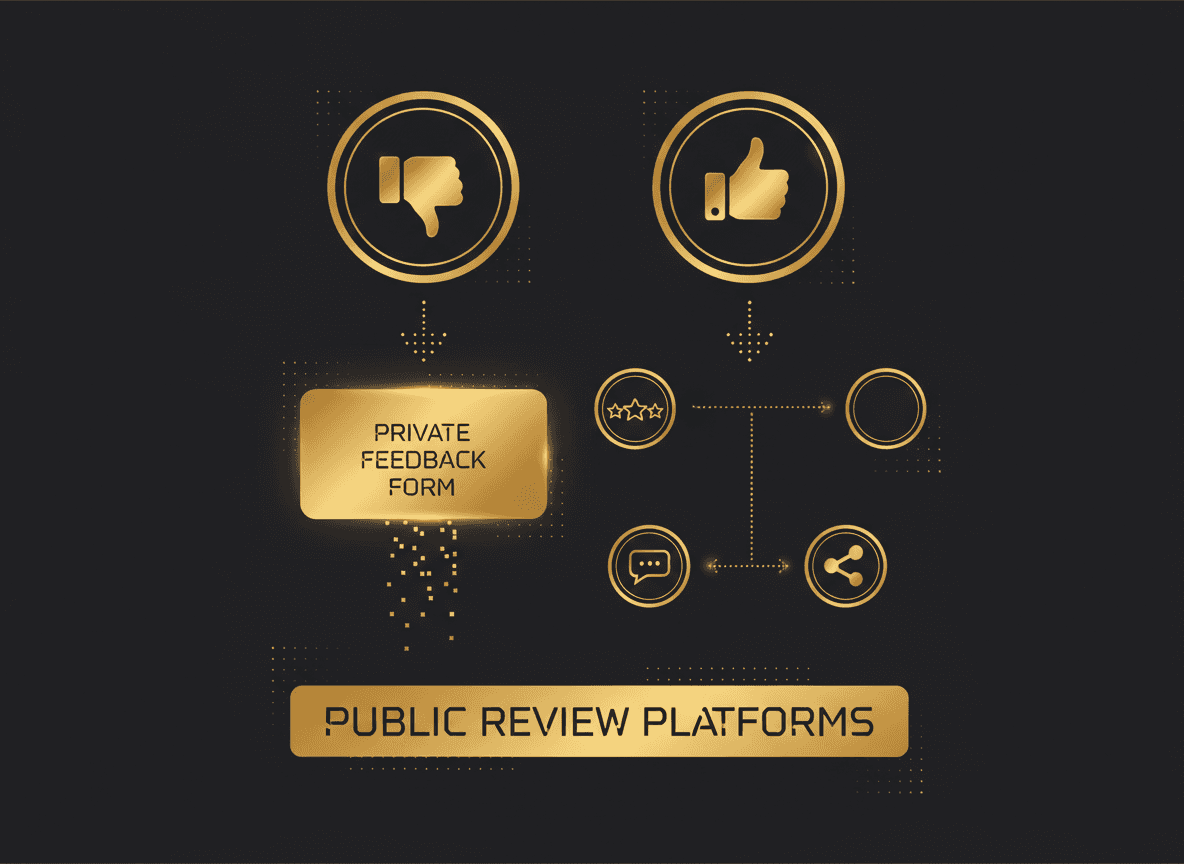
Here's the flow. After every appointment, send a one-tap message: "How was your visit today — thumbs up or thumbs down?"
This single fork does two jobs at once. It catches problems privately and sends your happy customers exactly where new buyers are looking. That's how you flip mixed sentiment into a wall of recent positive reviews without begging or gaming anything.
Most owners ask for reviews at the worst possible moment — never, or in a mass email nobody opens.
Ask when the customer is happiest: right after the service, while they're still in the chair or walking out. That's peak goodwill.
Make it one tap. Every extra click cuts your review rate. A link that pre-loads the review box beats "search for us on Google and leave a review" by a wide margin.
And concentrate the flow on the platforms buyers actually check for your niche. A clinic and a barbershop don't live on the same sites. Sending everyone to one primary platform builds momentum where it converts instead of scattering three reviews across six pages.
Do this consistently and your recent reviews stay fresh — which matters, because a steady stream of new reviews tends to carry more weight with buyers than an old all-time average.
Stop treating reviews as vanity and start treating them as conversion.
Every person landing on your profile is a booking that could go either way. What they see — the responses, the recency, the way you handle criticism — decides which way it tips. A managed reputation with owner replies and steady recent reviews converts more of the same traffic you already have. No new marketing spend. Just fixing the leak at the bottom of the funnel.
That's the whole game: you don't need more eyeballs, you need more of your existing eyeballs to say yes.
Mixed reviews and silence are quietly costing you booked appointments every week. The fix is a response cadence, a private-first routing flow, and a review system pointed at the platforms that convert — running on autopilot instead of your good intentions.
Want to see exactly where your reputation is leaking bookings? Run your free Revenue Code Diagnostic — it maps your reputation and booking flow against the revenue you're actually leaving on the table. Then you'll know precisely what to fix first.
Want more like this? Browse the blog or book a pricing call.
Most SaaS founders treat the free trial as a waiting room. The ones converting at 25% or higher treat it as a structured sales system. Here is how to build that system.
Read moreA product roadmap tells you what you are building. A revenue engine tells you whether it is making money. Most SaaS founders only have one of these, and it is the wrong one.
Read more