Blog - The latest articles and news
Stay up-to-date with the latest industry news as our marketing teams finds new ways to re-purpose old CSS tricks articles.
Stay up-to-date with the latest industry news as our marketing teams finds new ways to re-purpose old CSS tricks articles.
by Kingdom Kode Team, Digital Innovation

You spent $200 on ads to book that consult. Your provider spent 45 minutes in the room. The patient nodded at a $6,000 treatment plan and said, "Let me think about it." Then they ghosted. If you want to know how to increase treatment plan acceptance, start here: getting the patient in the door was never your problem.
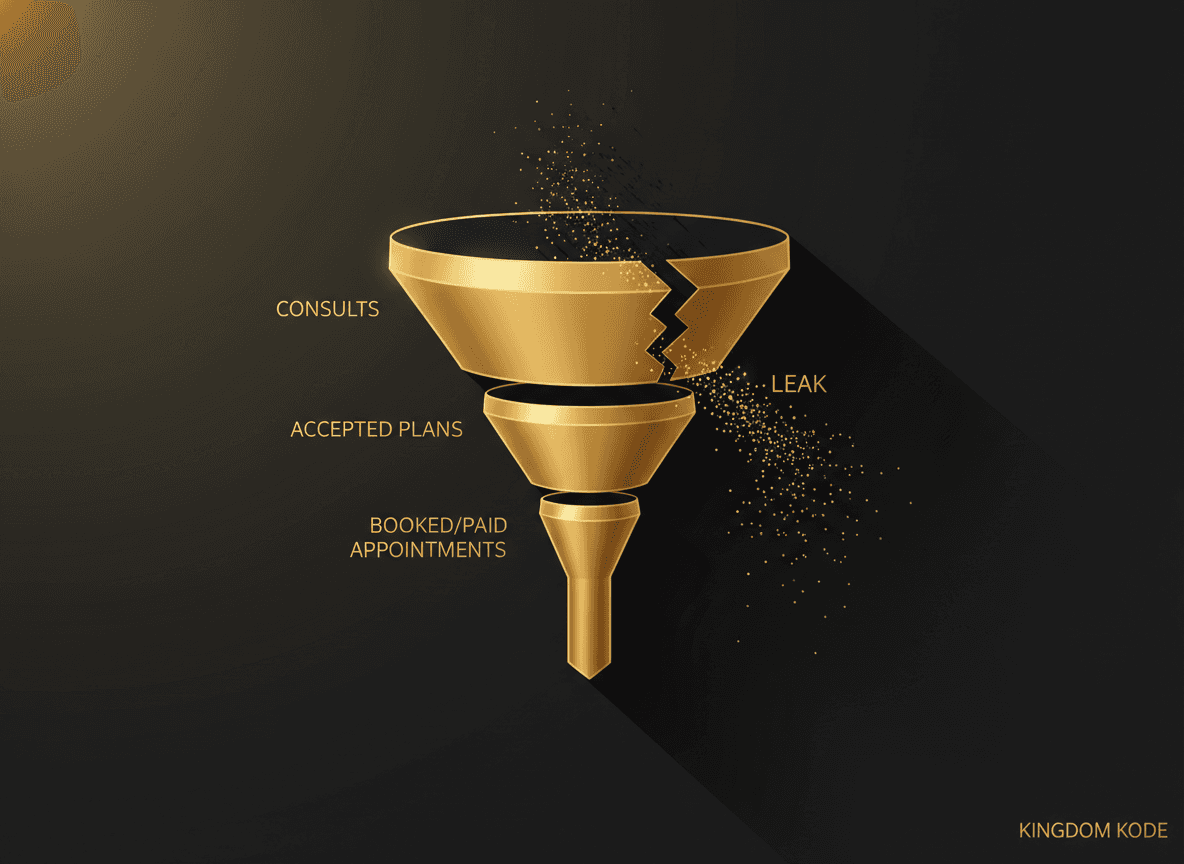
The leak is the gap between the consult and the booked, paid, deposit-secured appointment. That's where your highest-margin revenue quietly walks out the door — and most clinics never even measure it.
Most clinics obsess over the top of the funnel — more leads, more consults, more chairs filled. But imagine a med spa doing $80k/mo at a 35% consult-to-treatment rate. That clinic is leaving a second business on the table. Push acceptance to 55% and it didn't spend a dollar more on marketing. It just stopped the bleed.

Here are the four reasons your plans die after the consult.
The moment a patient says yes is the moment their motivation peaks. Every hour after that, it decays. If your front desk says "we'll call you to get you scheduled," you just handed the patient 48 hours to cool off, price-shop, and talk themselves out of it.
The fix: the treatment appointment gets booked before they leave the room. Not "we'll reach out." On the calendar. Today.
A verbal yes is worth almost nothing. A yes plus a $500 deposit is a commitment. A yes plus approved financing is a done deal.
Most clinics separate the emotional decision ("yes, I want this") from the financial one ("now let me figure out how to pay"). That gap is where the fear creeps in. Collect the deposit or run the financing application in the room, while the patient still feels the yes.
No CareCredit or Cherry integration at the point of sale? You're forcing patients to self-finance $6,000 out of pocket — and most won't.
"It'll be around six grand." That's what the patient remembers. Vague, negotiable, and easy to walk away from.
A written plan — itemized, with the specific package, the total, the deposit, and the financing monthly payment — turns an abstract number into a concrete decision. Hand it to them. Text it to them before they hit the parking lot. Make the yes tangible.
Here's the killer. A patient says "I'll think about it." What happens next at your clinic?
For most: nothing. Maybe a front-desk staffer remembers to call once, gets voicemail, and moves on.
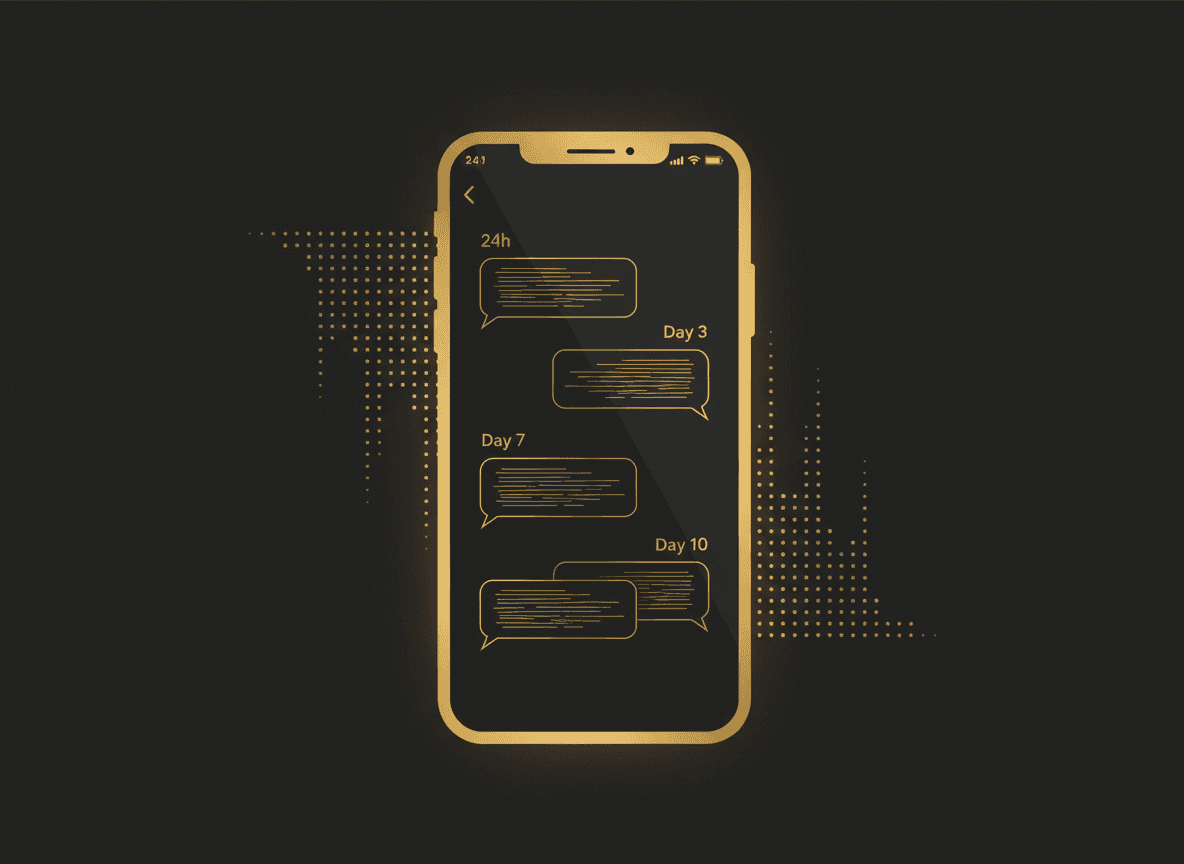
That unaccepted plan is a warm, qualified, high-intent lead who already spent an hour with you. And you're letting it rot. A structured follow-up sequence — text at 24 hours, a financing reminder at day 3, a value message at day 7, a soft "your provider held a slot for you" at day 10 — recovers cases you already wrote off.
The problem isn't any single leak. It's that booking, payments, and follow-up live in three disconnected tools — or worse, in a staffer's head. When they're integrated, the yes becomes frictionless:
None of this requires a bigger team. It requires a system that connects the moment of decision to the moment of payment.
Say you run 40 consults a month at an average plan of $5,000. At 35% acceptance, that's 14 cases — $70k. Move acceptance to 50% with same-day booking, deposits, and follow-up, and that's 20 cases — $100k. Same lead spend. Same providers. An extra $30k/mo, or $360k a year, from plugging the leak.
You don't have a lead problem. You have a conversion-and-follow-up problem — and it's the most profitable one to fix, because the traffic is already paid for.
Every clinic's funnel leaks in a different spot. For some it's the deposit. For others it's the dead follow-up. You can't fix what you haven't measured.
Run your free Revenue Code Diagnostic and we'll map exactly where your high-value consult funnel is losing money — and what it's costing you every month. It takes a few minutes and shows you the number you've been guessing at.
Want to talk it through first? Book a pricing call.
Most SaaS founders treat the free trial as a waiting room. The ones converting at 25% or higher treat it as a structured sales system. Here is how to build that system.
Read moreA product roadmap tells you what you are building. A revenue engine tells you whether it is making money. Most SaaS founders only have one of these, and it is the wrong one.
Read more