Blog - The latest articles and news
Stay up-to-date with the latest industry news as our marketing teams finds new ways to re-purpose old CSS tricks articles.
Stay up-to-date with the latest industry news as our marketing teams finds new ways to re-purpose old CSS tricks articles.
by Kingdom Kode Team, Digital Innovation

If you're asking "how to get more new patients for my clinic," you probably don't have a traffic problem. You have a conversion problem. People are already finding you — searching your name, clicking your Google listing, landing on your site — and then quietly leaving without booking.
That's the expensive part. You paid for that visitor (with time, referrals, or ad spend), they raised their hand, and your website waved them off.
Let's teardown why, and fix it.
Before you fix anything, get honest about the math. A new patient isn't a single appointment. It's a lifetime value.
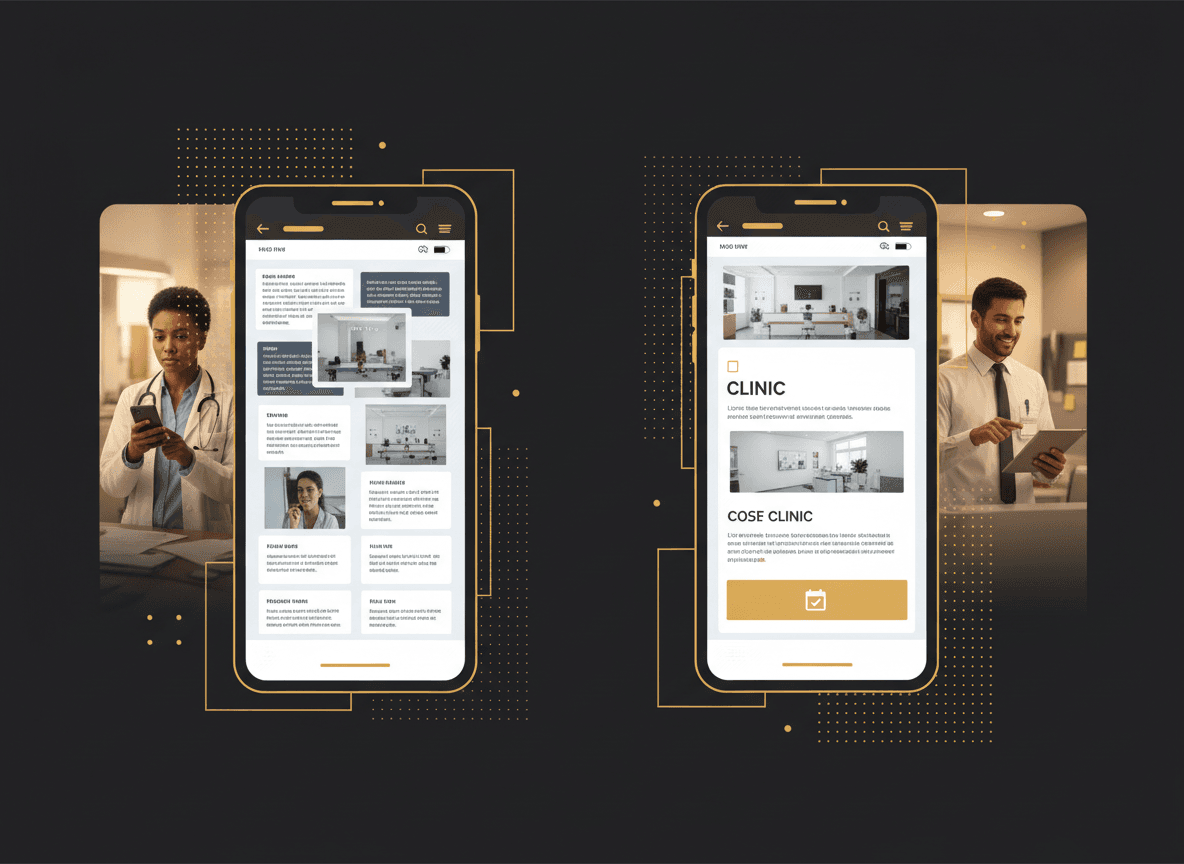
Run the numbers for your own clinic. Just to illustrate the point with hypothetical figures — plug in your real ones:
The exact number depends on your fees and retention. But the principle holds for every clinic: when a would-be patient bounces off your site, you didn't lose one appointment fee. You lost the entire relationship — plus every person they'd have referred.
Once you see one new patient as thousands of dollars in lifetime value instead of one visit, fixing a leaky website stops being a "nice to have." It becomes the highest-ROI thing on your desk.
Here's where high-value first appointments quietly disappear.

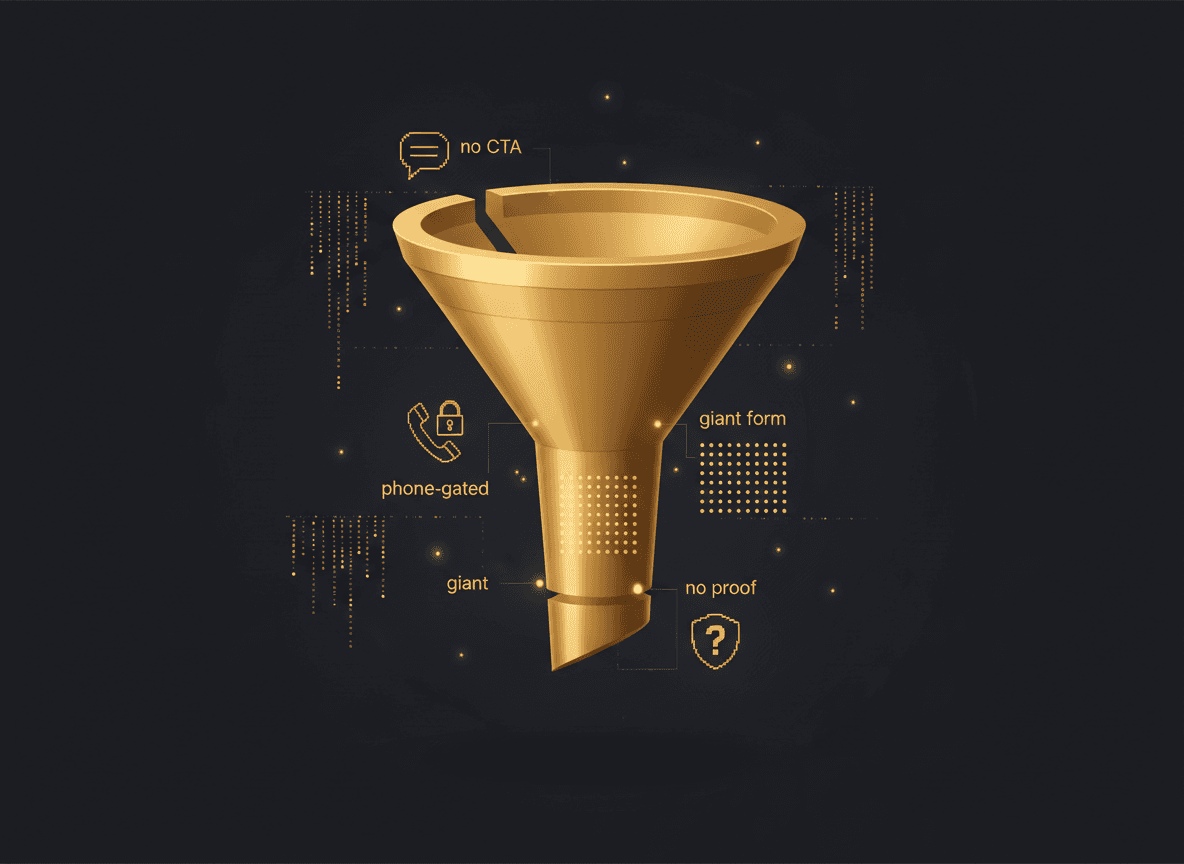
Leak 1: No clear new-patient CTA. Your homepage talks about your services, your team, your history — but a first-time visitor can't find one obvious "Book Your First Visit" button. New patients need a different door than existing ones. If you make them hunt, they leave.
Leak 2: Phone-gated booking. "Call us to schedule." That worked in 2010. Today a large share of people booking healthcare want to do it outside business hours, without talking to anyone. If your only path is a phone call during the exact hours they're at their own job, you're filtering out your busiest, highest-value patients.
Leak 3: The form from hell. A 15-field intake form as the first step is a wall. Name, DOB, insurance ID, medical history, referral source — before they've even committed. Every field is a reason to abandon. You're asking for a marriage on the first date.
Leak 4: Zero proof. A new patient choosing a provider is nervous. If your site has no reviews, no ratings, no before/after evidence, no faces — you're asking for trust you haven't earned on the page.
Any one of these leaks costs you patients. Most clinics have all four.
Here's the order that actually turns a visitor into a scheduled first appointment.
Above the fold, on every key page: a single, obvious action. "Book Your First Visit — Online in 60 Seconds." Make the new-patient path the loudest thing on the site. Existing patients can find the portal; new patients get the red carpet.
Let them pick a time online, 24/7. But be strategic about what you ask when. Instead of a giant form up front, collect the two or three things that matter — reason for visit, insurance carrier, new-or-returning — inside the booking flow.
This does two jobs: it removes friction for the patient, and it pre-qualifies them for you. You learn if their insurance fits before they walk in, and your front desk gets a clean, sorted appointment instead of a mystery.
Put your Google rating and a few real reviews next to the booking button. Not buried on a testimonials page — at the exact moment of decision. For aesthetic clinics, before/after galleries. For dental and med, star ratings and short quotes. Proof lowers the fear that stops the click.
Some patients will still send a form or message instead of booking. What happens next decides everything.
Lead value decays fast. A patient who fills out a form is comparing you against every other clinic — and the one who responds first usually wins. If a form comes in at 7pm and someone calls back at 10am the next day, there's a good chance that patient already booked with the clinic that answered sooner.
Build an instant response — automated text confirmation immediately, human follow-up as fast as possible during hours. Speed isn't customer service. It's revenue.
Clear new-patient CTA → frictionless online booking with pre-qualification → proof at the point of decision → ruthless speed-to-response. That's the funnel. Each step plugs a specific leak, and because each new patient is worth far more than a single appointment fee, even a small lift in conversion pays for the fix many times over.
You don't need more traffic. You need to stop leaking the traffic you already have.
Want to see which of these four leaks is costing your clinic the most right now? Run your free Revenue Code Diagnostic. It pinpoints where new patients are dropping off your site and what to fix first.
When you're ready to build the funnel that books them, Book a pricing call and we'll map the implementation for your practice.
Most SaaS founders treat the free trial as a waiting room. The ones converting at 25% or higher treat it as a structured sales system. Here is how to build that system.
Read moreA product roadmap tells you what you are building. A revenue engine tells you whether it is making money. Most SaaS founders only have one of these, and it is the wrong one.
Read more