Blog - The latest articles and news
Stay up-to-date with the latest industry news as our marketing teams finds new ways to re-purpose old CSS tricks articles.
Stay up-to-date with the latest industry news as our marketing teams finds new ways to re-purpose old CSS tricks articles.
by Kingdom Kode Team, Digital Innovation
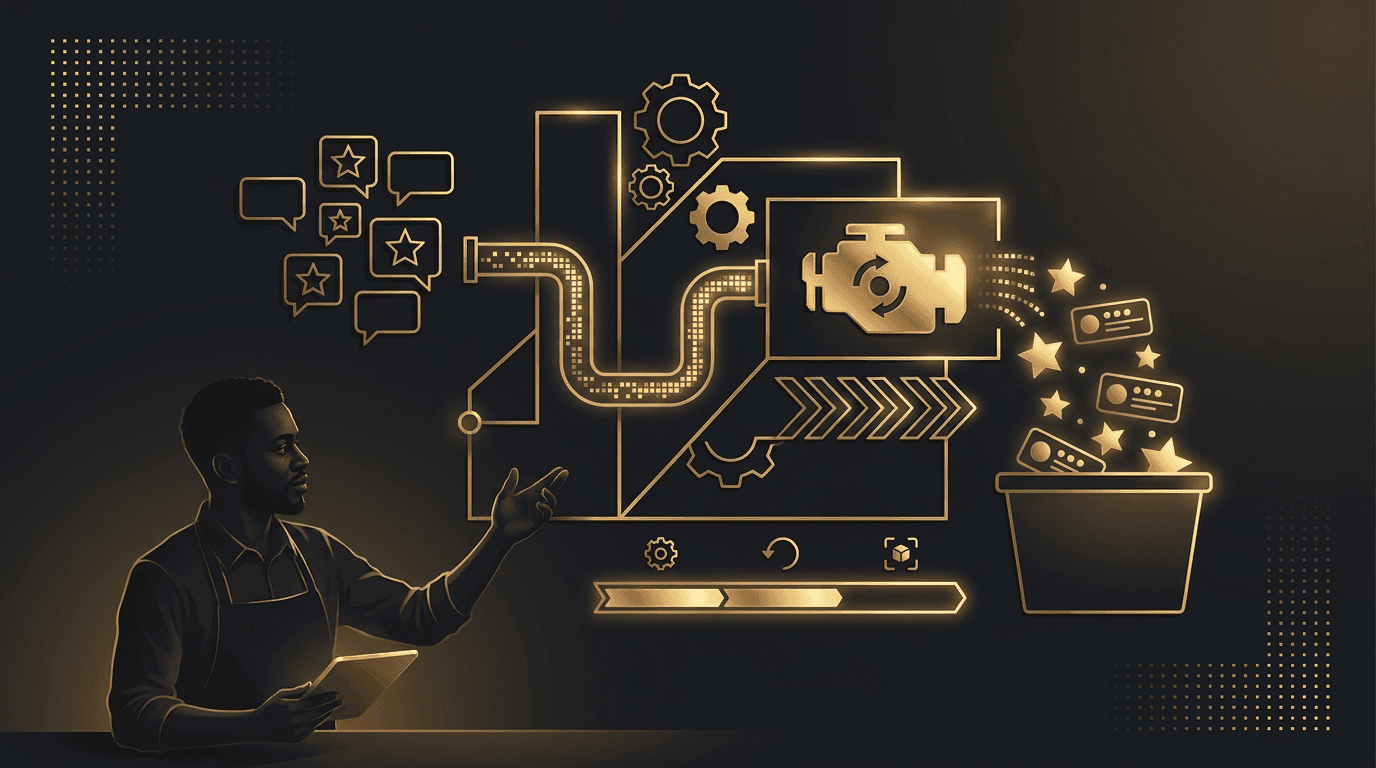
You do great work. Your regulars love you. So why are you losing new customers to the shop down the street that isn't half as good? Because when they Google you, they see nothing — and if you've ever asked how to get more customer reviews for my business, that blank space is exactly the problem this post fixes.
No stars. No reviews. "No review platforms found." In that instant, prospects silently disqualify you. And the fix isn't nagging — it's a system that runs itself.
Here's the hard truth: your service quality doesn't matter if no one can verify it before they walk in.
Every prospect runs the same math without realizing it. They see a competitor with 200 reviews at 4.8 stars. Then they see you with 3 reviews or none.
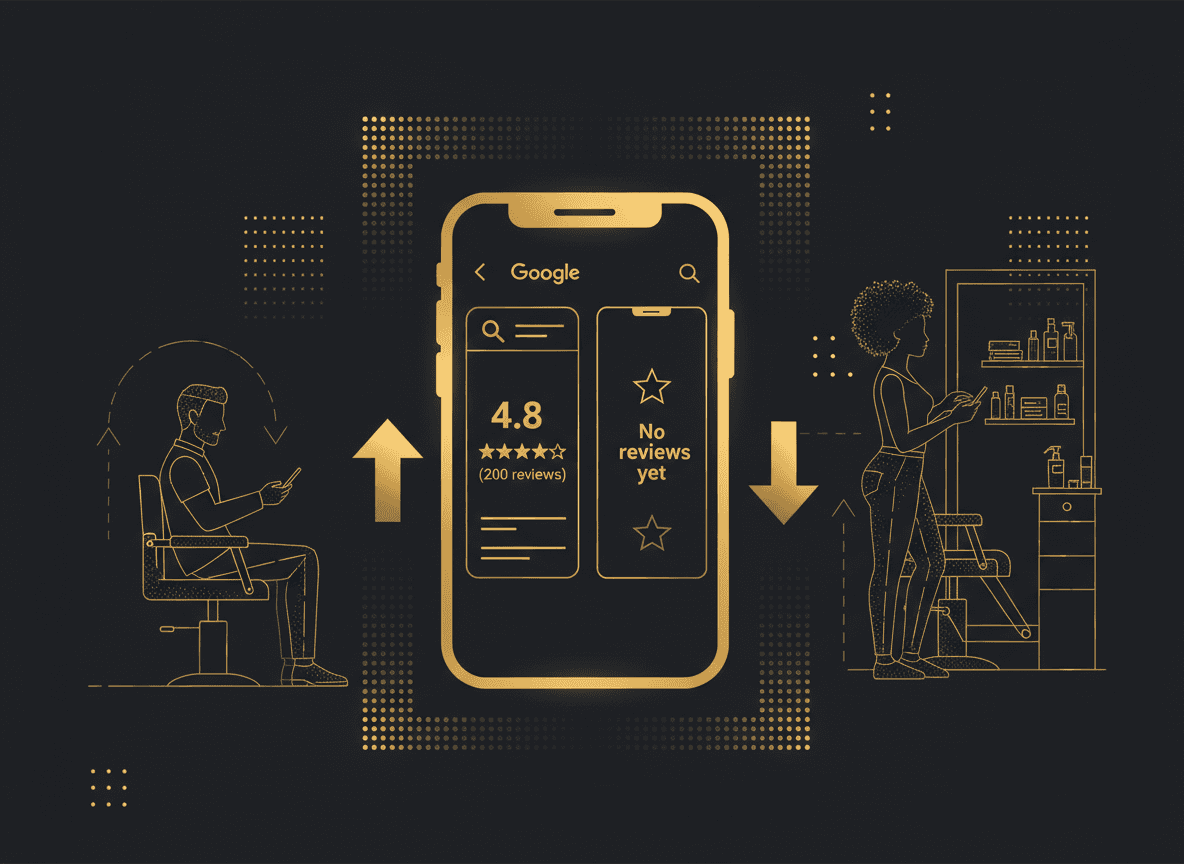
No one wants to be the guinea pig. Zero reviews doesn't read as "new and undiscovered." It reads as "risky." So they book the safe option, even if that option is worse than you.
That's the trust tax. You pay it on every single search where you show up looking invisible. And you never see the bill — because the customer never calls. They just quietly pick someone else.
A barbershop doing $30k/mo with no reviews isn't losing a few walk-ins. It's losing the entire top of the funnel — the people comparing three options on their phone at 9pm.
Let's put numbers on it.
Reviews do two things: they lift your ranking in the local map pack (more people see you), and they lift your conversion rate (more of those people choose you). It compounds.
Moving from 0 to 50 reviews isn't a 50-step improvement. It's a threshold. In my experience, a handful of reviews still reads as untested, and somewhere in the range of a few dozen at a solid star rating is where a business starts to look "obviously legit" to a skeptical prospect. That's the range where hesitation drops and people tap "call."
Run a rough hypothetical: say you get 40 new-customer clicks a week. At zero reviews, maybe 8 book. Cross the trust threshold and it's reasonable to expect that same traffic to convert noticeably higher — same ad spend, same location, same you. The only variable that changed was social proof.
That's not a marketing expense. That's found money sitting in a review count you never built.
Stop thinking about reviews as something you "remember to ask for." You won't. You're busy running the business. Manual asks get you 2 reviews a month on a good month.

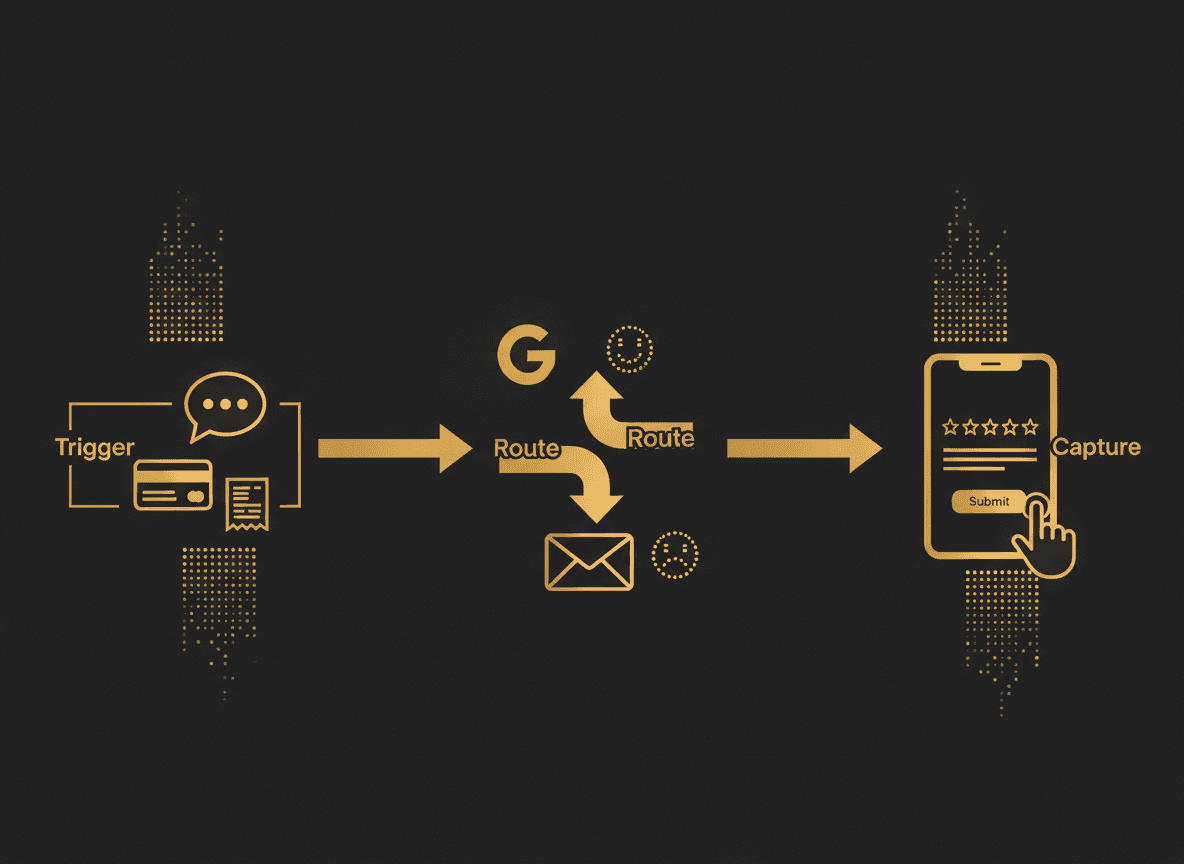
Instead, install an engine with three parts:
1. The Trigger. Every review request fires automatically at the moment of peak happiness — right after checkout or payment. Not three days later when they've forgotten you. A text goes out within minutes of the transaction: "Thanks for coming in, [Name] — mind sharing how we did?"
2. The Route. This is the part most people miss. Don't send everyone straight to Google. First ask a simple question: "How was your experience?" Happy customers get routed directly to your Google review link with one tap. Unhappy customers get routed to a private message that comes straight to you.
3. The Capture. For the happy path, remove every ounce of friction. Pre-filled link, lands right on the review box, works on their phone in 15 seconds. For the unhappy path, you catch the complaint privately, fix it, and save the relationship — instead of eating a 1-star review in public.
That routing step protects your rating while it grows. You're not gaming anything. You're simply making it easy for satisfied customers to speak and giving unhappy ones a direct line to you first.
You don't need 500 requests. You need consistency.
Even at a modest response rate, that volume gets you past the trust threshold inside a month. Not because you begged. Because the system asked everyone, every time.
The reason you don't have reviews isn't that customers won't leave them. It's that you've been relying on willpower and memory. Both fail under a full schedule.
An installed review flow removes you from the loop. It runs on every transaction, forever, whether you think about it or not. That's the difference between a business that hopes for reviews and one that manufactures them predictably.
Your competitors aren't better than you. They just look better on the search results page. Close that gap and the bookings follow.
Want to know exactly where your invisible reputation is costing you customers — and what to fix first? Run your free Revenue Code Diagnostic. It pinpoints the gaps in your online trust and shows you the highest-leverage fix for your business.
We'll tell you the truth about what's leaking. The install is what we do. Start with the diagnostic, or read more breakdowns on the blog.
Most SaaS founders treat the free trial as a waiting room. The ones converting at 25% or higher treat it as a structured sales system. Here is how to build that system.
Read moreA product roadmap tells you what you are building. A revenue engine tells you whether it is making money. Most SaaS founders only have one of these, and it is the wrong one.
Read more