Blog - The latest articles and news
Stay up-to-date with the latest industry news as our marketing teams finds new ways to re-purpose old CSS tricks articles.
Stay up-to-date with the latest industry news as our marketing teams finds new ways to re-purpose old CSS tricks articles.
by Kingdom Kode Team, Digital Innovation

You're booked solid Friday and Saturday. Then Tuesday hits and half your chairs sit empty. Same on Wednesday afternoon. You feel it in the deposit at the end of the week. And the real answer to how to fill empty appointment slots isn't more ad spend — it's already sitting in your customer list.
So what do you do instead? You throw $500 at ads to "drive traffic." That's the reflex. And it's the slowest, most expensive way to solve it.
Here's the truth: the fastest revenue you'll ever make is sitting in a list of people who have already paid you. You just can't see it, can't reach it, or aren't using it.
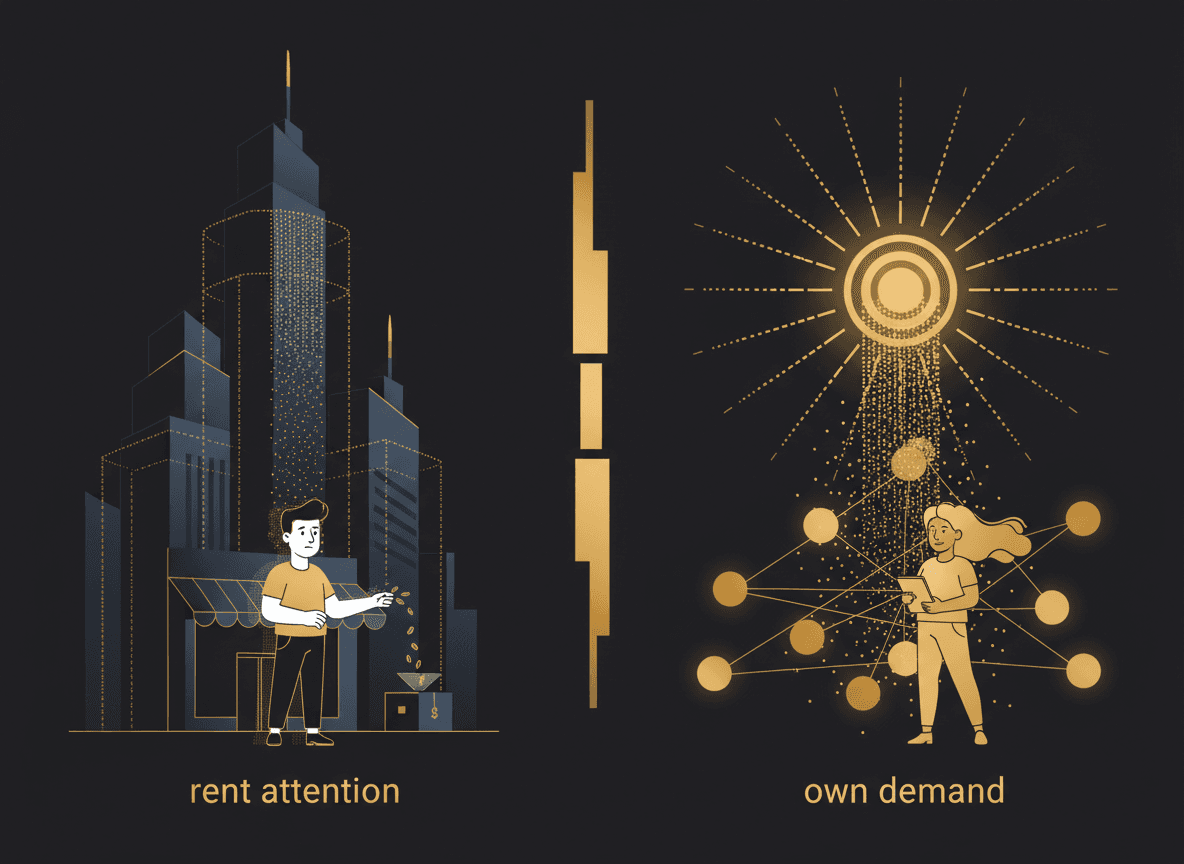
When you buy ads, you're renting attention from strangers. Cold people who've never heard of you. You pay to teach them who you are, build a little trust, and hope they book. That's a long, expensive road — and the meter runs whether they book or not.

Activating your existing list is the opposite. These people already know you. They've sat in your chair. They've paid your prices and liked the result. Reaching them costs pennies — a text, an email. The trust is already built.
Say you run a barbershop doing $30k/mo with a $35 average ticket. Ten empty midweek slots means $350 evaporating that day. Do that every week and you're bleeding $1,400+ a month in pure capacity you already staffed and paid rent for.
Refilling those slots with ads could cost you real money per new client — call it an illustrative $40–80 in ad spend to acquire someone cold — and take days to warm up. A text blast to 300 past clients costs you a couple dollars and lands in 60 seconds.
Same goal. Wildly different math.
Owned demand is any customer whose contact info you control — not a follower count you rent from an algorithm, but a phone number and email in a database you own. Here are the three plays that fill dead hours.
Don't discount your whole week. Discount only the dead hours. "Tuesday and Wednesday this week: $10 off any cut before 3pm." Send it to clients who haven't booked in 30–60 days.
The offer is surgical. You're not cheapening your peak times — you're monetizing capacity that would otherwise be worth zero.
Your Saturdays are full and people get turned away. Where do those names go? For most owners: nowhere. That's demand walking out the door.
A waitlist that captures every "sorry, we're booked" and automatically texts them the second a slot opens turns cancellations into instant rebookings. A no-show at 2pm should trigger a text to the next three people in line before the chair's even cold.
Someone cancels tomorrow at 11am. Instead of eating the loss, you broadcast: "Opening tomorrow 11am — first to reply gets it." To the right segment, that slot fills in minutes.
This is the difference between a calendar that leaks money and one that self-heals.
Here's the part most owners miss. The reason you can't run these plays isn't that you don't have the customers — it's that your data is scattered.

Some contacts live in your booking app. Some in your phone. Some in Instagram DMs. Some on paper. Some in a card reader you barely log into.
A fragmented stack means there is no single list. And you can't blast an offer to a list that doesn't exist in one place. So the demand that could refill Tuesday stays invisible — and you go buy ads instead.
The fix is a centralized client database. Every client, every visit, every phone number, in one place you own. Once that exists, targeted offers, waitlist automation, and last-minute broadcasts become a five-minute task instead of an impossible one.
That's the whole fix. Not more traffic. Better use of the traffic you already earned and paid for once.
Empty chairs midweek aren't a marketing problem. They're an activation problem. The customers are there. The reach costs almost nothing. The only thing missing is the system to see the list and act on it.
Want to know exactly where your owned demand is leaking — and which of these plays would refill your calendar fastest? Run your free Revenue Code Diagnostic. It maps where your revenue is hiding across your tools so you stop renting attention you don't need.
Or read more breakdowns on the blog if you want to keep digging first.
Most SaaS founders treat the free trial as a waiting room. The ones converting at 25% or higher treat it as a structured sales system. Here is how to build that system.
Read moreA product roadmap tells you what you are building. A revenue engine tells you whether it is making money. Most SaaS founders only have one of these, and it is the wrong one.
Read more