Blog - The latest articles and news
Stay up-to-date with the latest industry news as our marketing teams finds new ways to re-purpose old CSS tricks articles.
Stay up-to-date with the latest industry news as our marketing teams finds new ways to re-purpose old CSS tricks articles.
by Kingdom Kode Team, Digital Innovation

You've priced out an app. The number made you flinch. And a voice in your head keeps asking the same thing: does my small business need an app, or am I about to light money on fire?
Good instinct. Because most small businesses don't need one. They need an app the way a barber needs a helicopter — impressive, expensive, and solving a problem they don't have.
But some businesses are quietly bleeding money every single month without one. The difference isn't your industry. It's your math. Let me show you exactly where the line is.
If a customer buys from you once and disappears, an app is a vanity project.
A wedding photographer. A roofer. A moving company. These are one-and-done or once-every-decade purchases. Nobody is downloading your app to book a new roof they'll need in 2041. For these businesses, an app is a $20k icon nobody taps twice.
What these businesses actually need is a website that ranks, loads fast, and turns clicks into calls. Spending on an app here is solving the wrong problem with the most expensive tool available.
So if that's you, stop reading and go fix your site. Seriously. You just saved yourself a fortune.
An app earns its keep when your business runs on repeat visits. To know if that's you, look at three numbers:
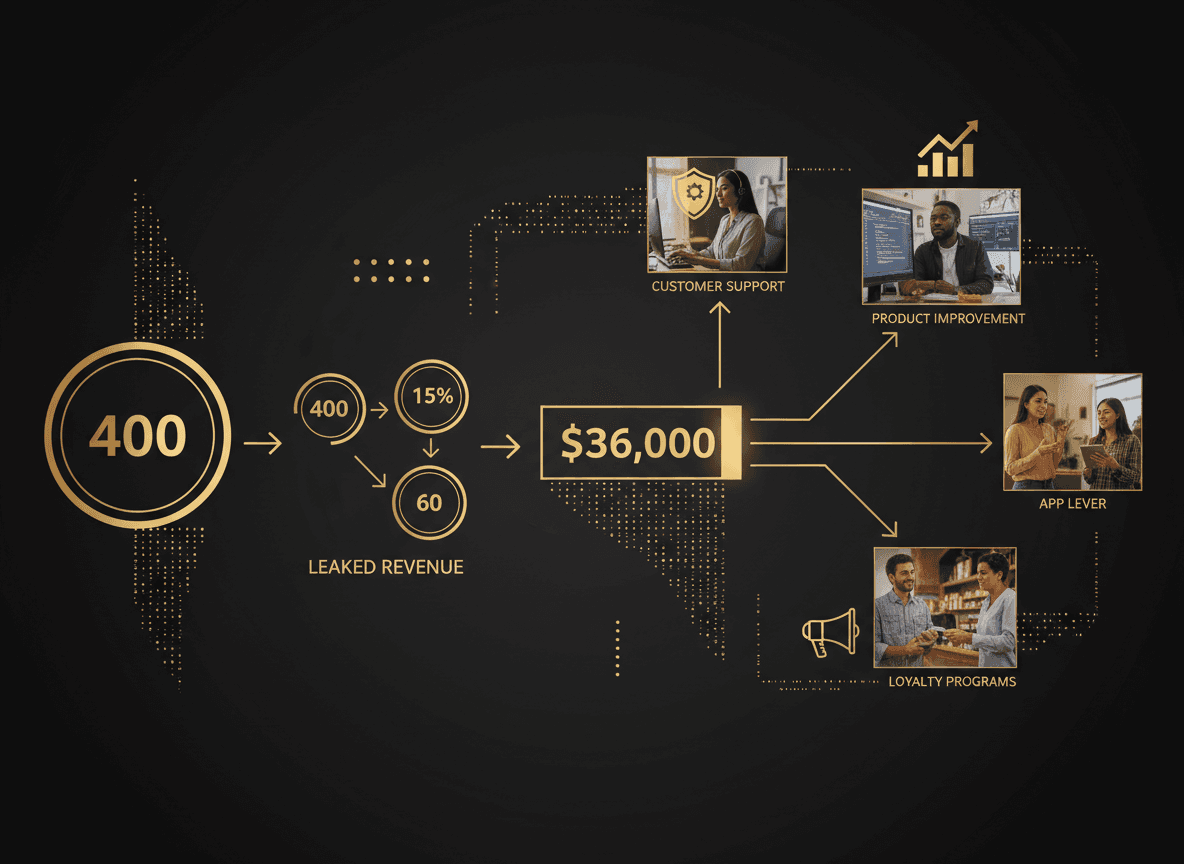
1. Visit frequency. How often does a happy customer come back? Weekly? Monthly? A barbershop client comes in every 3-4 weeks. A cafe regular comes 3x a week. A gym member is supposed to show up 12x a month. High frequency is the first green light.
2. Repeat-purchase rate. What percentage of customers come back at all? If 60%+ of your revenue comes from people who've bought before, you're a retention business whether you've admitted it or not.
3. The cost of a no-show or a forgotten rebooking. Every empty chair, table, or class slot is revenue you can never resell. That time is gone.
Three yeses? An app is likely a Revenue Engine. Three noes? It's a money pit. Let's do the math so you're not guessing.
Here's the honest calculation, using illustrative numbers so you can plug in your own.
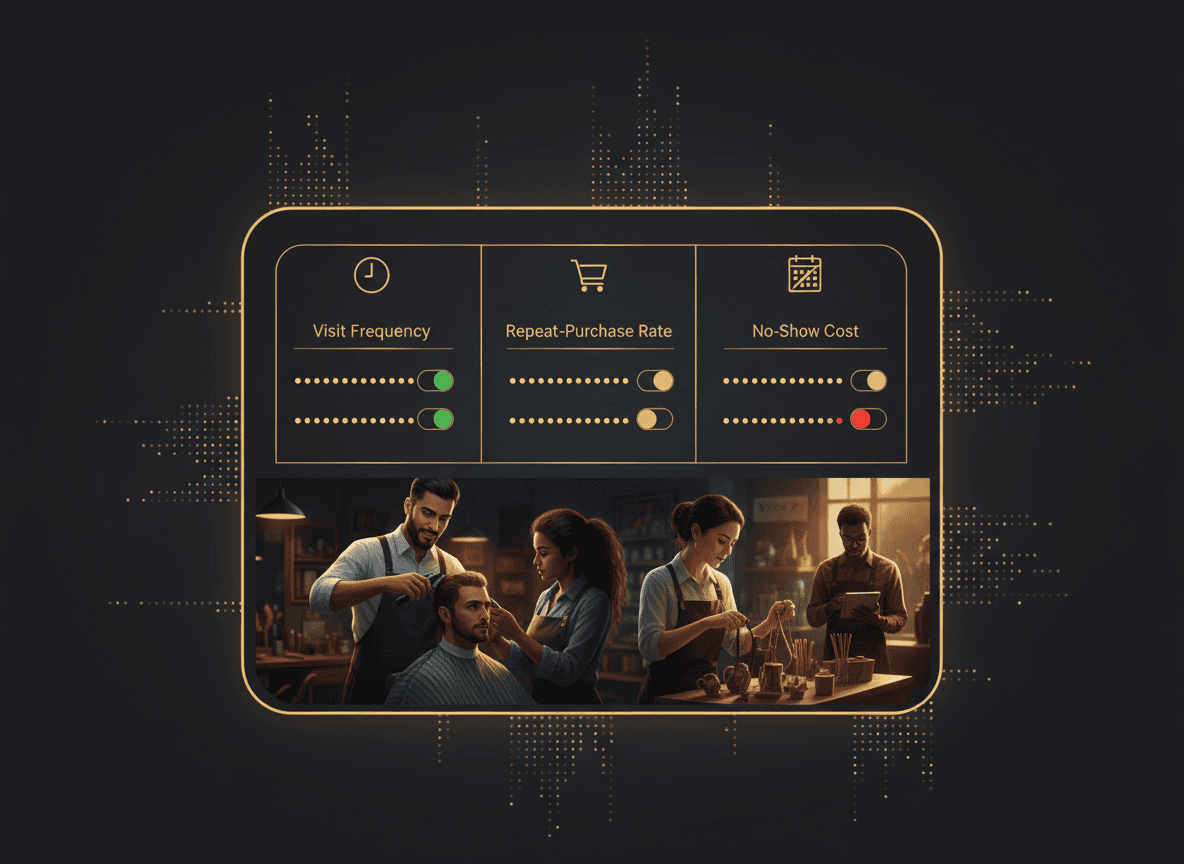
Say you're a barbershop doing $30k/month with 400 active clients. Your average client should come in 13 times a year. But life happens — people forget, they drift, they try the shop closer to their new apartment. Say 15% of clients you should keep quietly churn each year.
That's 60 clients gone. At an average lifetime value of, say, $600/year, that's $36,000 in annual revenue walking out the door — not because your cuts got worse, but because rebooking took too much friction and nobody reminded them.
Now ask: what closes that gap?
If an app recovers even a third of that leaked $36k, it pays for itself in year one and prints money after. That's the test. Not "is an app cool" — but "what's my retention leak, and does an app plug it faster than anything else?"
A website is where strangers find you. An app is where regulars live.
The magic isn't the technology. It's the friction removed at the exact moment a customer decides whether to come back:
Gyms, salons, barbershops, cafes, nail studios, pet groomers, tutoring centers — anywhere loyal customers come back on a rhythm — these levers compound every single month.
Here's your homework. Pull three numbers: your repeat-purchase rate, your average visit frequency, and your rough annual churn. Multiply your churned customers by their lifetime value. That's your leak.
If the leak is small, keep your money. If it's five figures a year, an app isn't a vanity purchase — it's the highest-leverage fix you're not making.
And if you don't know those numbers cold, that's the real problem to solve first.
That's exactly what the free Revenue Code Diagnostic does. It benchmarks your retention and rebooking gaps so you can see — in plain dollars — whether an app is the right lever before you spend anything. No pitch, just your numbers.
Run your free Revenue Code Diagnostic and find out if you're leaking retention revenue an app would recover — or if you're better off leaving that money in your pocket.
Want to see how other repeat-visit businesses think about this? Browse more breakdowns on the blog.
Most SaaS founders treat the free trial as a waiting room. The ones converting at 25% or higher treat it as a structured sales system. Here is how to build that system.
Read moreA product roadmap tells you what you are building. A revenue engine tells you whether it is making money. Most SaaS founders only have one of these, and it is the wrong one.
Read more