Blog - The latest articles and news
Stay up-to-date with the latest industry news as our marketing teams finds new ways to re-purpose old CSS tricks articles.
Stay up-to-date with the latest industry news as our marketing teams finds new ways to re-purpose old CSS tricks articles.
by Kingdom Kode Team, Digital Innovation

You have regulars. People who come in three, four, five times a month. And you can't name a single one of them, can't text them, can't tell me how much the average regular spends versus a walk-in. That's the expensive problem. A digital loyalty program for restaurants isn't about giving away free coffee — it's about knowing who your best customers are and getting them to come back more often, spend more, and bring friends.
Right now that money is invisible. And you can't grow a number you can't see.
Punch cards get lost. They're in a wallet, a car cup holder, the wash. The customer forgets, you forget, and the whole point — a reason to come back — evaporates. You get zero data. You can't tell who's on card number one and who's on card number nine.
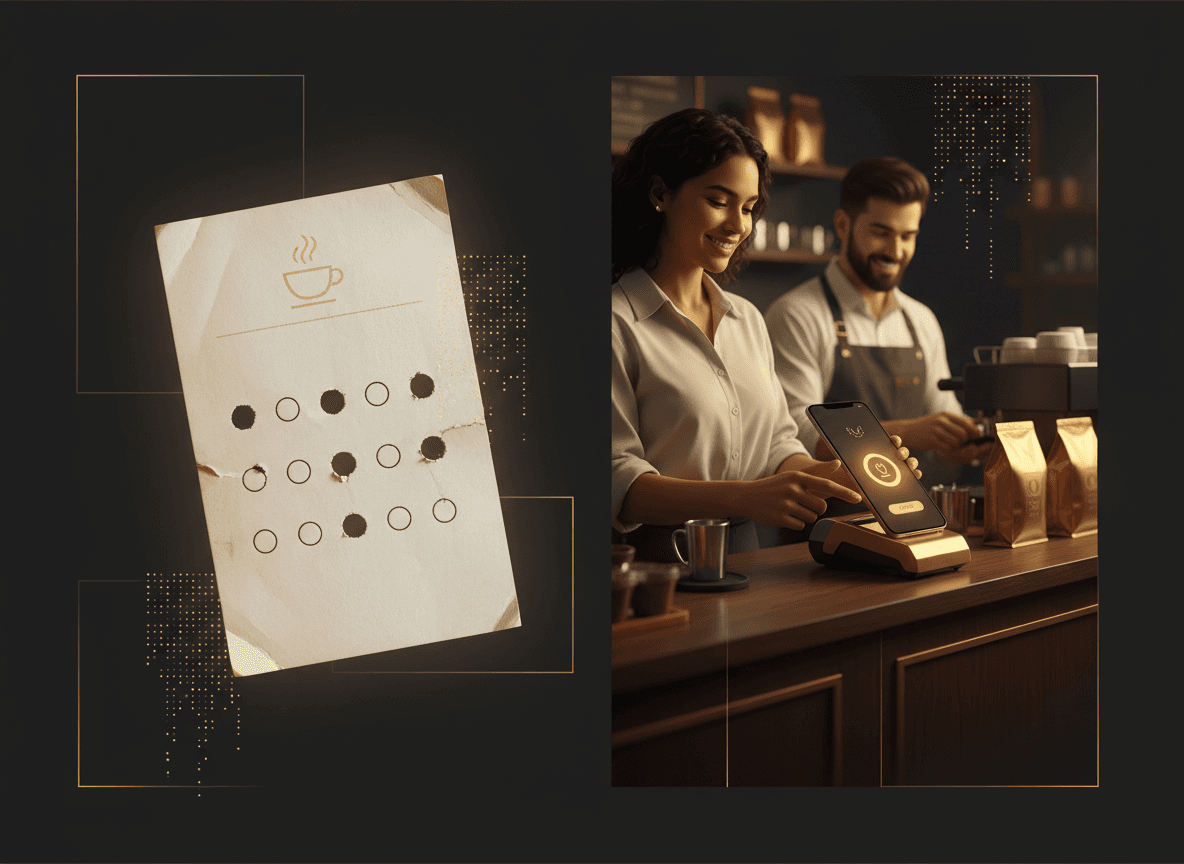
The stamp apps look smarter. They're not. Here's the trade you're actually making: you drive traffic and revenue, and they collect the customer list. The phone numbers, the emails, the visit history — that lives on their servers, under their terms. When they raise prices or start marketing competing restaurants to your customers, you have no leverage. You're renting access to people you already earned.
Same problem with delivery apps. That $40 order? You don't get the customer. The app does. You paid 25-30% commission to acquire a customer you'll never be able to contact again.
Owning the list is the whole game. Renting it is why you feel busy and broke at the same time.
First-party means the data is yours. The customer signs up with your program, on your system, and their info sits in your list — not a vendor's.

That unlocks three things a punch card never could:
A stamp is a discount. A list is an asset. One costs you money; the other prints it.
Stop measuring loyalty by "stamps given." Measure the three numbers that actually change your bank balance:
Run the math on a cafe doing $30k/month. If loyalty nudges your regulars from 3 to 3.5 visits a month, that's not a rounding error — that's thousands of dollars a month from people already walking past your door.
Here's the kicker: most owners have no idea what their current frequency even is. You can't improve it because you never tracked it.
Bad loyalty programs are a coupon in disguise. You give away margin to people who were going to buy anyway.
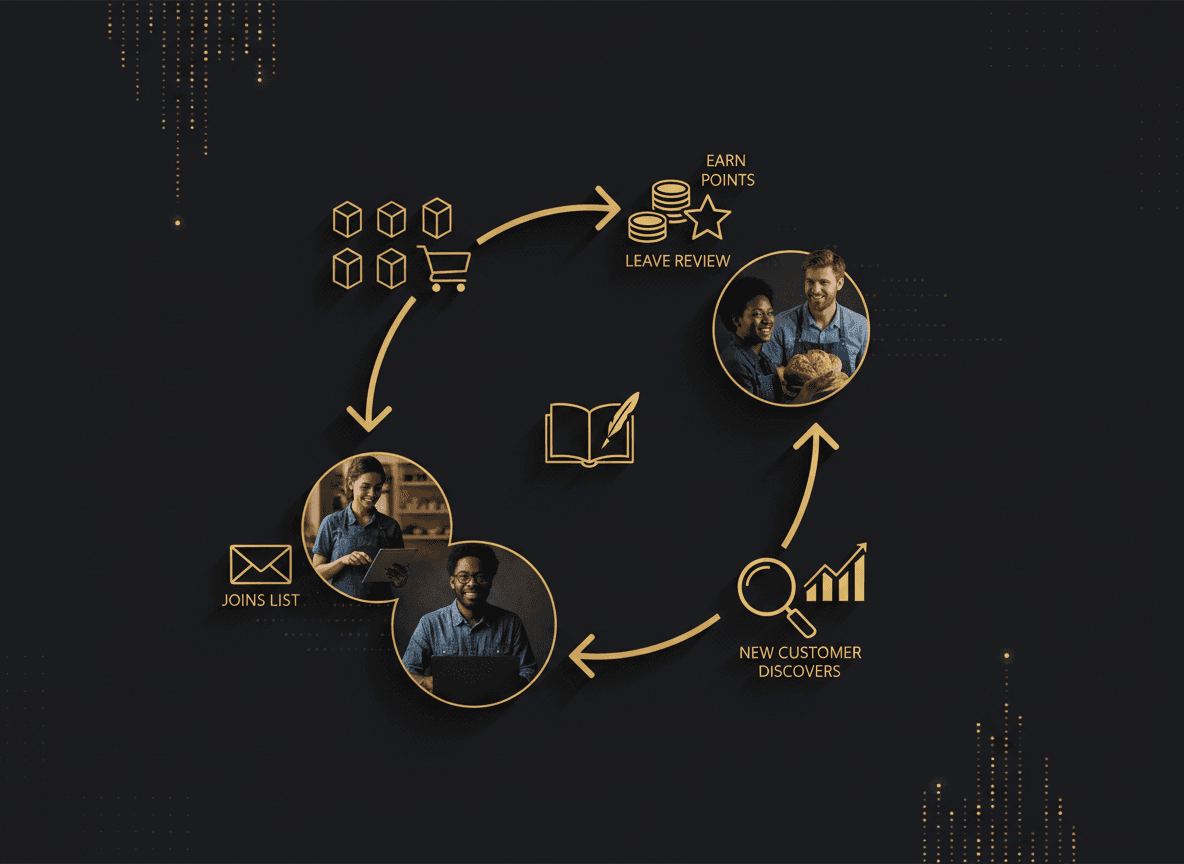
Good loyalty programs make the reward do work. Structure it so every reward earns you something back:
That's the difference between spending on loyalty and investing in it. The reward triggers a review, the review pulls a new customer, the new customer joins the list. It compounds.
Loyalty shouldn't be a standalone app your customer downloads and abandons. It should be plumbed into how they already order.
Direct online ordering — on your site, not the delivery app — plus loyalty is the combination that breaks your dependence on third parties. Customer orders direct, earns points, gets a reason to order direct again. You skip the 25-30% commission and you keep the data. Every direct order is one you didn't rent.
Then close the loop: after a great visit, the system asks for a review and rewards it. Reviews raise your ranking, ranking brings walk-ins, walk-ins join the program. The whole machine feeds itself instead of leaking out to apps that don't care if you survive.
Don't boil the ocean. In order:
Most owners get stuck at step one because capture feels awkward at a busy counter. That's an implementation problem, and it's solvable.
Can you tell me, today, how much revenue comes from repeat visits versus first-timers? If the answer is "no," you're not running a retention system — you're guessing. And your competitor with a real list is quietly eating your regulars.
The free Revenue Code Diagnostic shows you exactly where repeat-visit revenue is going untracked — and what it's costing you. It takes a few minutes and you keep the findings whether we work together or not.
Run your free Revenue Code Diagnostic →
Want to see how the ordering and review pieces fit together? Read more on the blog or get in touch.
Most SaaS founders treat the free trial as a waiting room. The ones converting at 25% or higher treat it as a structured sales system. Here is how to build that system.
Read moreA product roadmap tells you what you are building. A revenue engine tells you whether it is making money. Most SaaS founders only have one of these, and it is the wrong one.
Read more