Blog - The latest articles and news
Stay up-to-date with the latest industry news as our marketing teams finds new ways to re-purpose old CSS tricks articles.
Stay up-to-date with the latest industry news as our marketing teams finds new ways to re-purpose old CSS tricks articles.
by Kingdom Kode Team, Digital Innovation

Someone landed on your site at 9:47pm, ready to buy. Credit card practically out. And your website said: fill out this form and we'll get back to you.
They didn't. They booked your competitor instead.
That's the whole problem with contact form vs online booking. A contact form asks a ready-to-buy customer to stop, wait, and hope you reply. A booking button lets them commit money in 90 seconds. One of those captures revenue. The other leaks it.
If your service business collects inquiries through a form instead of confirmed bookings, you're not running a booking system. You're running a to-do list. And that to-do list is costing you money you'll never see on a report — because you can't count the customers who never called back.
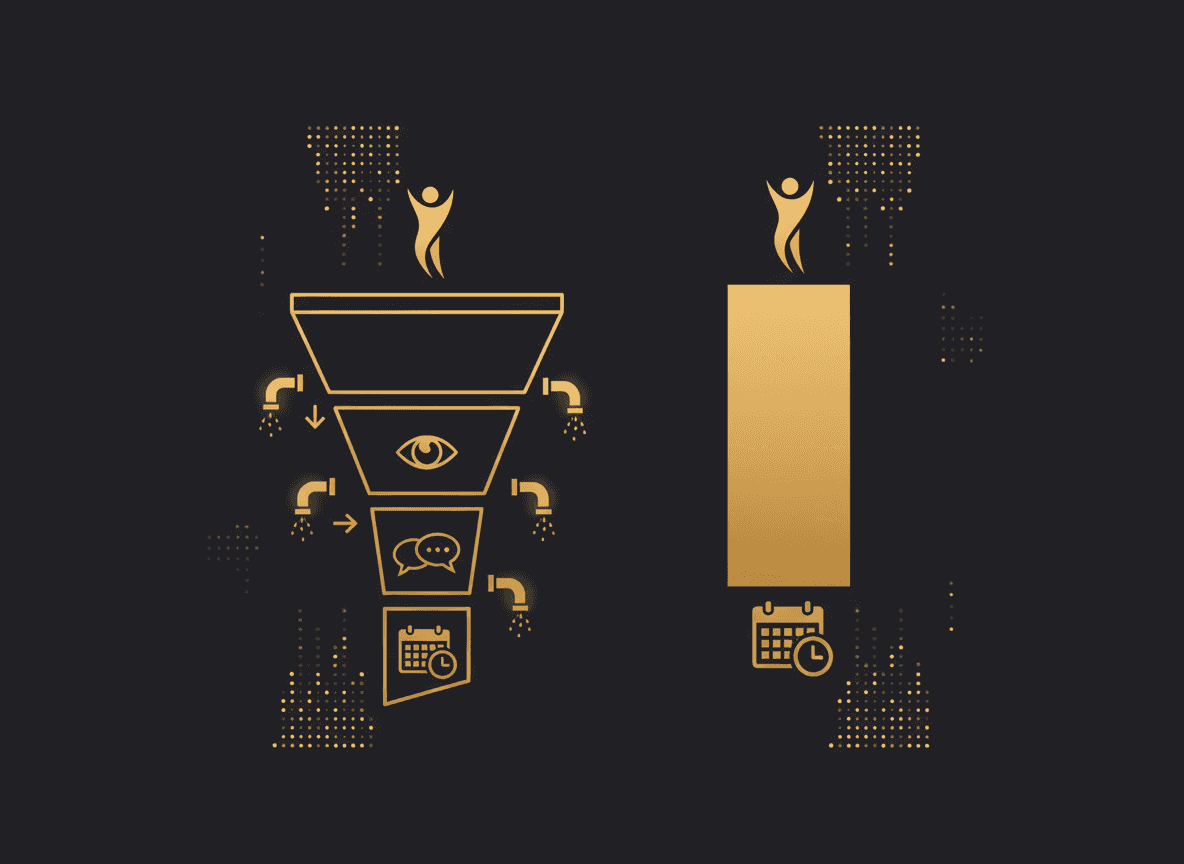
Every step between wanting to buy and being booked is a place people quit. A contact form adds four extra steps:
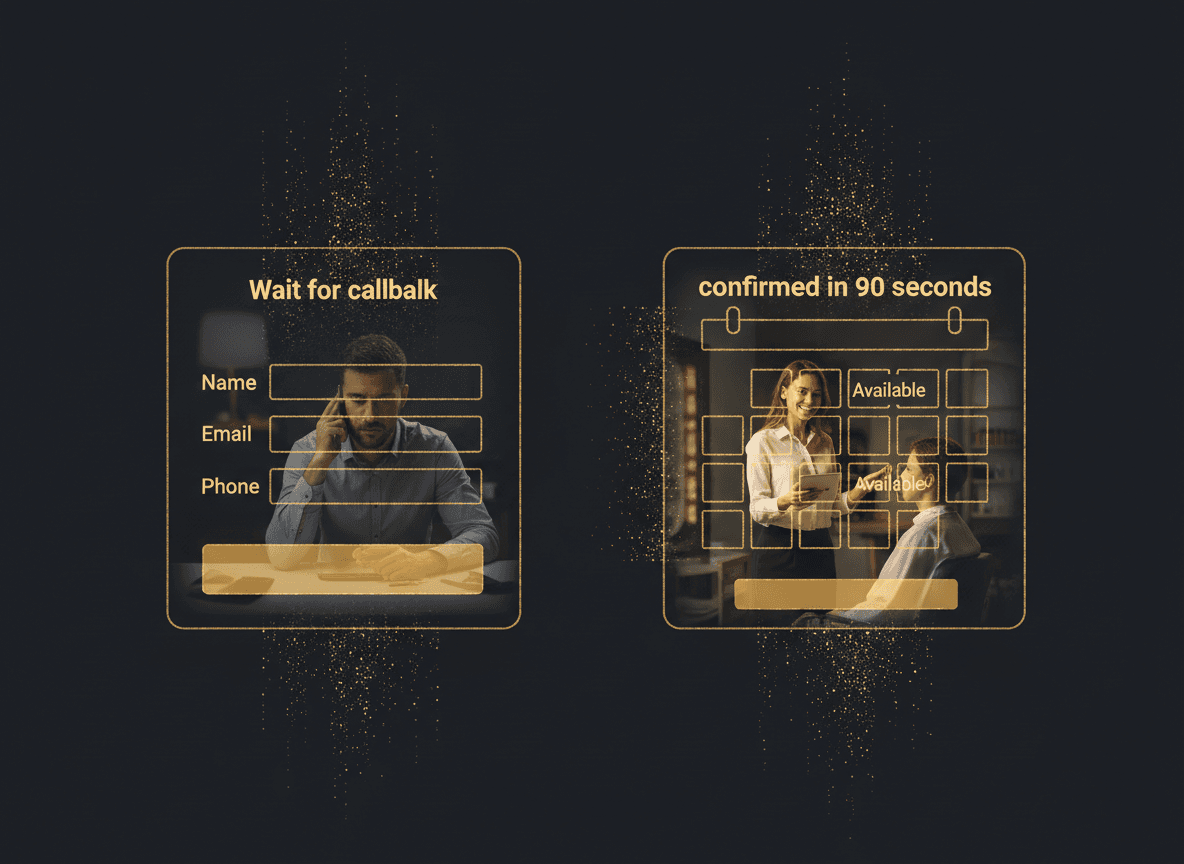
That's four chances to lose them. A booking flow has one step: they book.
Run the math for a clinic doing 200 form submissions a month. Say 70% of those people were genuinely ready to book. That's 140 warm buyers. If your manual follow-up converts even half of them — and that's generous — you booked 70 and lost 70. At a $180 average ticket, that's $12,600 a month walking out the door. Not because your service is bad. Because your website made buying harder than it needed to be.
The form didn't collect leads. It created a leak.
Here's the part owners underestimate: when people actually try to book.
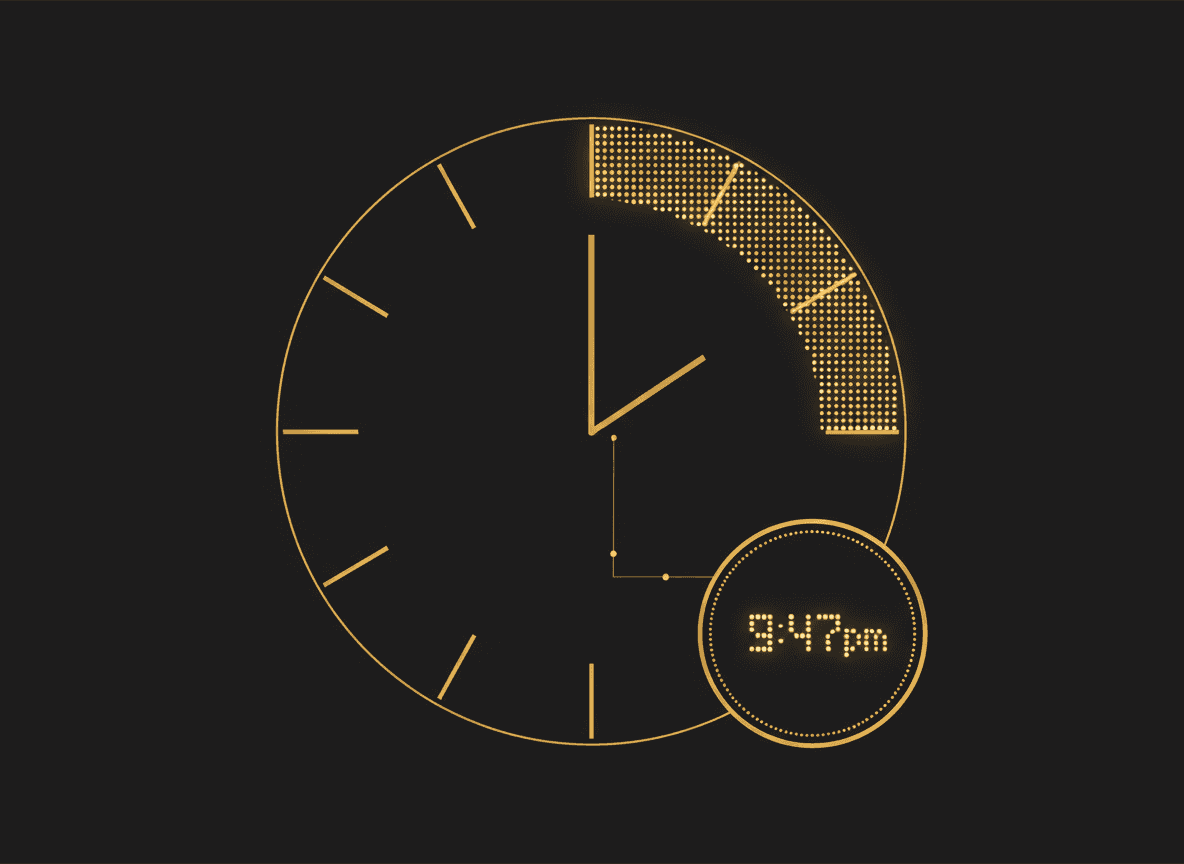
Evenings. Weekends. Lunch breaks. The exact hours your front desk is closed. A salon owner sees the form fill up at 8pm, replies at 10am the next morning — and half those people already booked somewhere with instant confirmation.
A contact form only works when a human is awake and available to answer it. That's maybe 40 hours of your week. The other 128 hours, your form is a parking lot for intent that goes stale by morning.
Online booking doesn't sleep. It takes the deposit at 9:47pm while you're on the couch.
Speed matters more than you think. The person who filled out your form was hot at that moment. Every hour you wait to reply, they cool off. They keep shopping. They forget they even contacted you.
Now add reality: your team is busy. The form reply is never the priority. It gets answered between appointments, or tomorrow, or never. A home services owner running jobs all day physically cannot reply to inquiries fast enough — so the best leads rot in an inbox.
You're not slow because you're bad. You're slow because a human is the bottleneck. Booking software removes the human from the critical path.
Let's be precise about what each one does.
A contact form captures an intention. "I might want to buy." It puts the work on you to convert that intention into a booking, manually, one message at a time.
Online booking captures a commitment. A specific time. A confirmed slot. Ideally a deposit. The customer did the work. You just show up and deliver.
A form says we'll get back to you. Booking says you're confirmed for Thursday at 2, see you then. One of those makes a customer feel taken care of. The other makes them feel like they're waiting in line.
And the deposit changes everything. When someone puts $50 down, they show up. No-shows plummet. Tire-kickers filter themselves out. Your calendar fills with people who already have skin in the game.
Replace the form with a flow that does three things automatically:
That's the difference between hoping people call back and knowing your Thursday is full. The contact form treats a buyer like a lead. A booking flow treats them like a customer. Buyers can tell.
Keep a contact form if you want — for actual questions, custom quotes, weird one-off requests. But the default action for someone ready to buy should never be "wait for us." It should be "book now."
The contact-form-instead-of-booking mistake is rarely the only leak on a service business site. It's usually one of several — and the others are just as expensive and just as invisible.
Run your free Revenue Code Diagnostic at /diagnostic. It shows you exactly where your website is losing bookings and money, step by step, so you can see the leaks before they cost you another month. No callback required — because we know how that goes.
Want more breakdowns like this? Head to the blog.
Most SaaS founders treat the free trial as a waiting room. The ones converting at 25% or higher treat it as a structured sales system. Here is how to build that system.
Read moreA product roadmap tells you what you are building. A revenue engine tells you whether it is making money. Most SaaS founders only have one of these, and it is the wrong one.
Read more