Blog - The latest articles and news
Stay up-to-date with the latest industry news as our marketing teams finds new ways to re-purpose old CSS tricks articles.
Stay up-to-date with the latest industry news as our marketing teams finds new ways to re-purpose old CSS tricks articles.
by Kingdom Kode Team, Digital Innovation
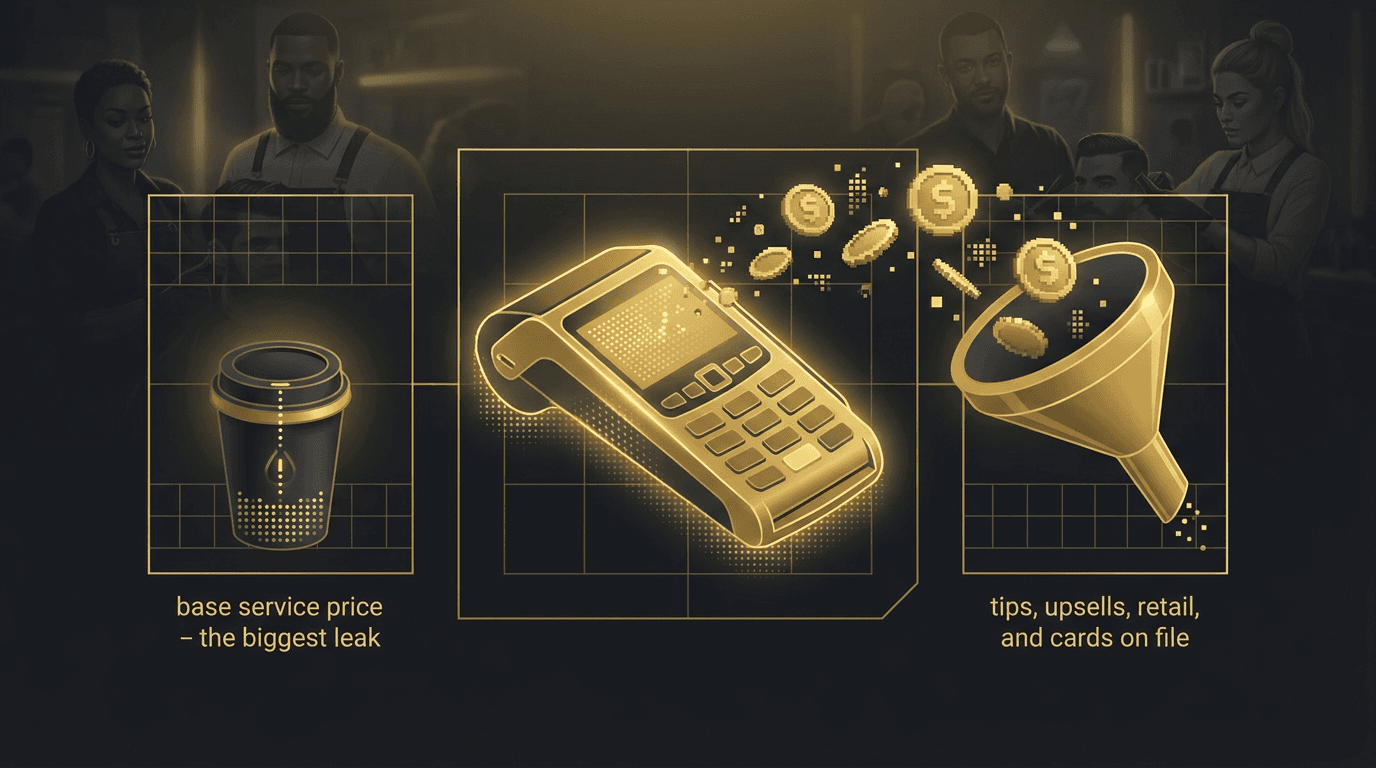
You added deposits to your booking. No-shows dropped. You felt like you plugged the leak. But the biggest cash leak in your business isn't no-shows — it's your checkout, and it's why the best payment system for salons and service businesses isn't a card reader at all.
You plugged a leak. Not the big one.
The big one is your checkout. If you're running a separate card reader or POS that only knows the base service price, you're leaving tips, add-ons, retail, and rebookings on the counter every single day. Payments wired directly into your booking and checkout capture all of it automatically.
Let me show you exactly where the money's going.
Deposits protect you from the appointment that doesn't happen. Good. Necessary.
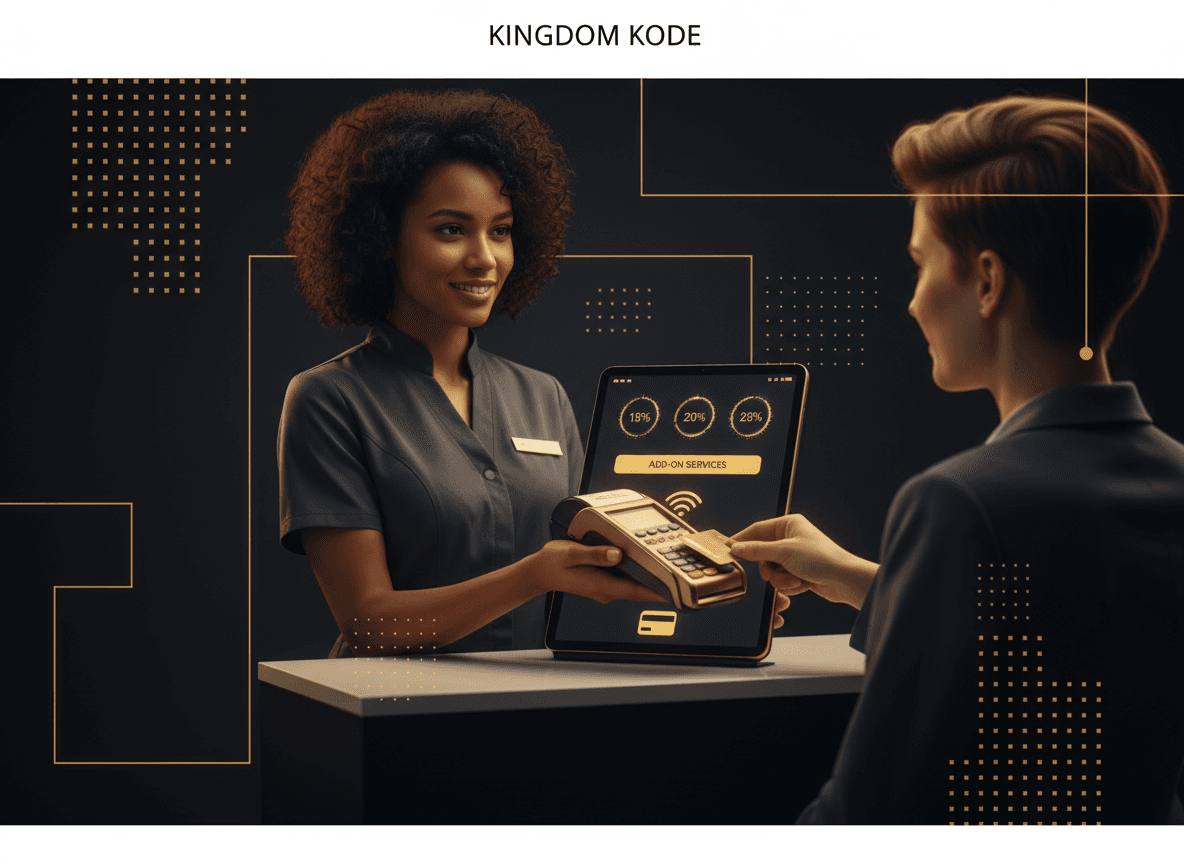
But every appointment that does happen runs through a checkout that's built to collect one number: the service price. $45 haircut. $90 balayage. $6 latte. Tap, done, next.
That checkout is the single highest-leverage moment you have with a customer — they're happy, they're standing in front of you, their card is already out — and most owners treat it like a formality. You're processing a transaction when you should be maximizing one.
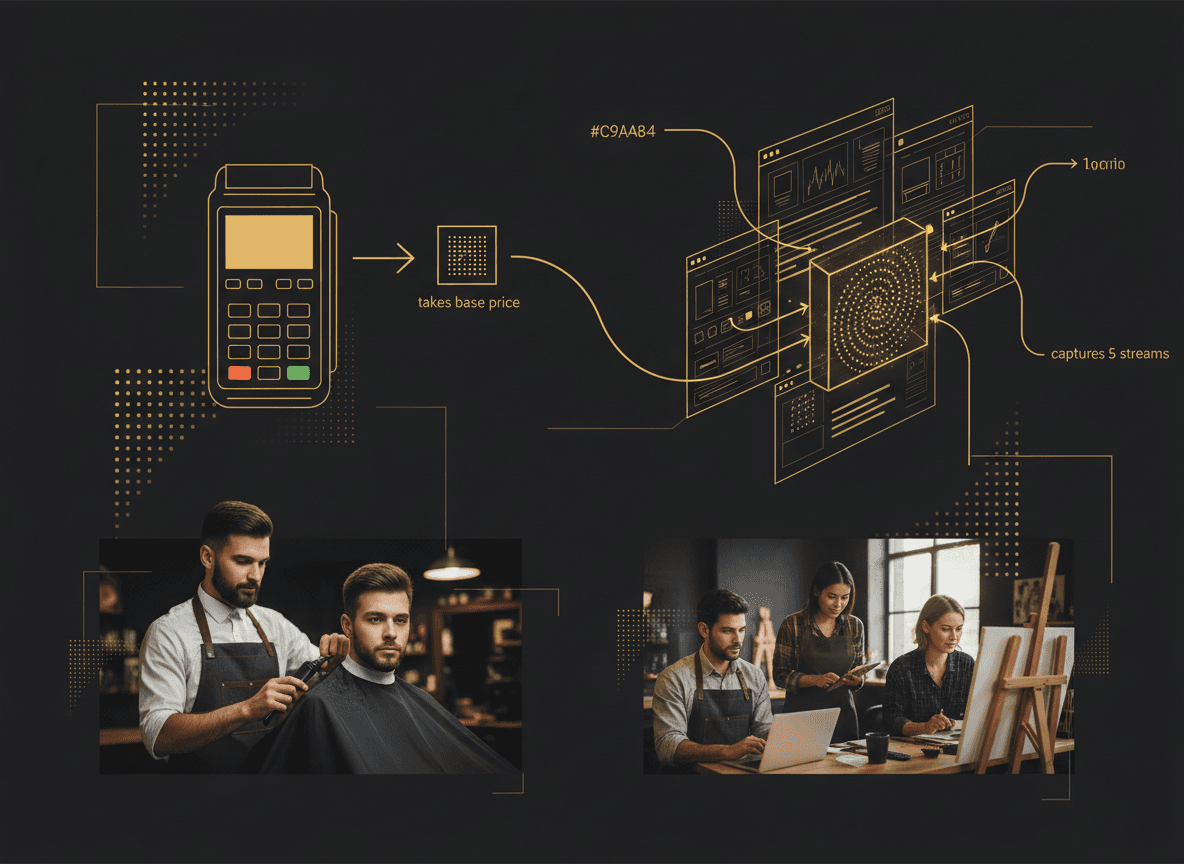
A disconnected reader captures the base price and nothing else. A full stack captures five revenue streams at the same moment:
1. Tips — at the screen, with smart defaults. A tip prompt with 18/20/25% pre-set buttons converts far better than a tip jar or a mumbled "you can add gratuity if you want." On a $60 service, the difference between a 15% default and a 22% default is real money on every ticket. Multiply by 40 tickets a week.
2. Add-ons and upsells — prompted, not remembered. "Add a deep-conditioning treatment for $15?" as a one-tap button at checkout beats hoping your stylist remembers to pitch it. The system asks every time. It never has an off day.
3. Retail — attached to the visit. The shampoo, the pomade, the retail line you carry but barely move. When retail is a button on the same checkout as the service, attachment rates climb because there's no separate transaction, no second line, no friction. The client already trusts what you used on them.
4. Packages and memberships — sold at peak happiness. The best time to sell a 5-visit package or a monthly membership is the second the client loves how they look. A unified checkout lets you offer it right there. A dumb card reader can't.
5. Card on file — for frictionless rebooking. When the card is stored, the next booking is one tap and the future no-show is pre-charged automatically. You stop chasing deposits because the card's already there.
A card reader does one of these. A real stack does all five, automatically, on every ticket.
Here's the difference in plain terms.

Standalone reader / disconnected POS:
Payments unified with booking and checkout:
The reader processes money. The stack grows it.
Don't take the categories on faith. Run your own numbers.
Picture a salon doing $30k/month across roughly 500 visits. Ask three questions:
That's $2,500+/month — $30k/year — that never showed up on a card reader because the card reader never asked for it. Nobody stole it. You just never presented it.
That's the leak deposits don't fix.
You don't need more staff or more clients. You need your checkout to do its job:
The hard part isn't the idea. It's wiring booking, checkout, and payments into one system that actually does this without adding steps for your front desk. That's the implementation — and that's what we build.
Run the math on your own ticket count and the annual number tends to be bigger than owners expect. The categories are simple. The dollars are not.
Run your free Revenue Code Diagnostic — we'll map exactly where your payments and booking setup is leaking revenue, and what a unified stack would recover. No pitch, just the diagnosis.
Want to talk it through first? Book a pricing call or read more breakdowns on the blog.
Most SaaS founders treat the free trial as a waiting room. The ones converting at 25% or higher treat it as a structured sales system. Here is how to build that system.
Read moreA product roadmap tells you what you are building. A revenue engine tells you whether it is making money. Most SaaS founders only have one of these, and it is the wrong one.
Read more